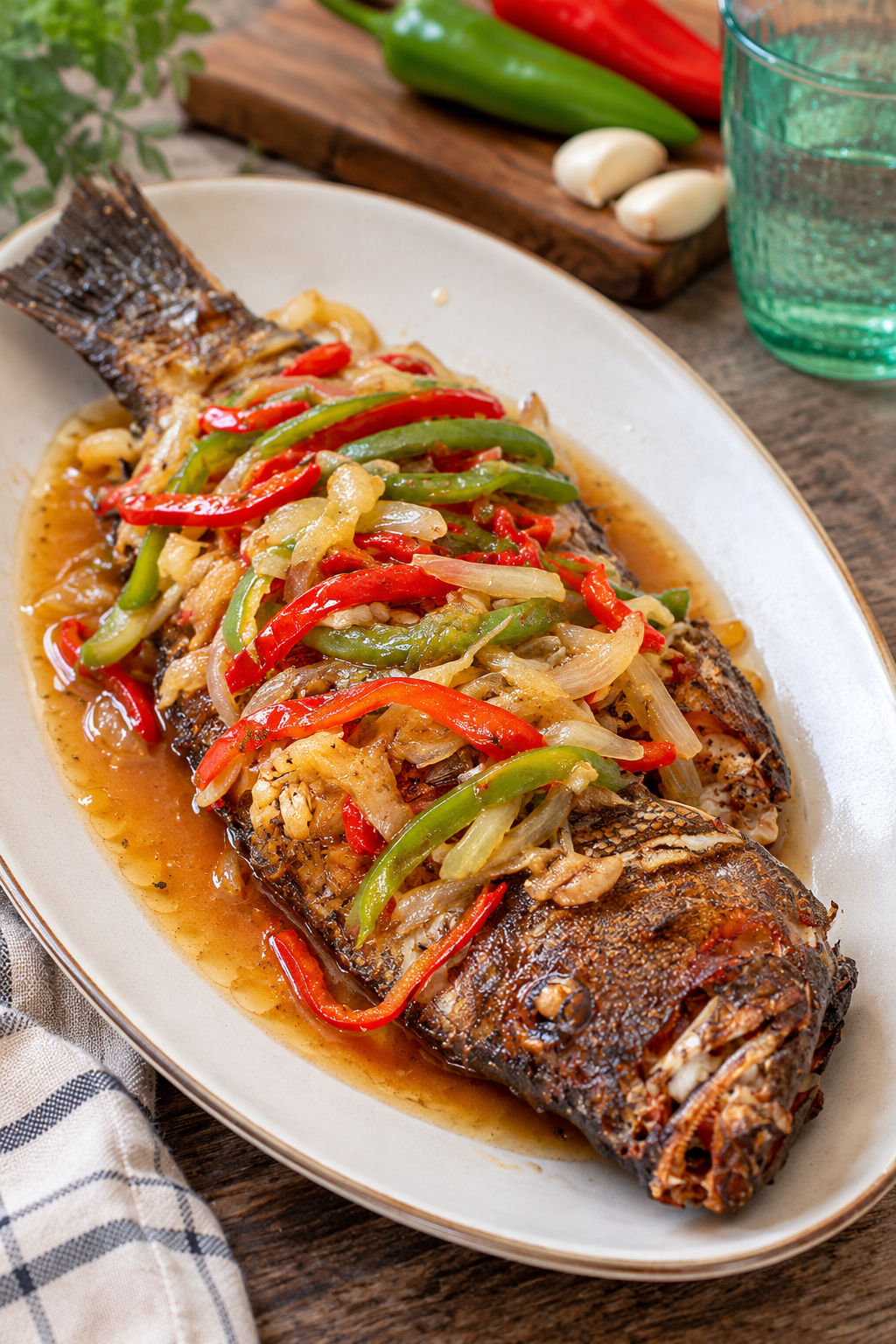
Crispy Fish with Garlic Pepper Sauce – An Easy Dinner Recipe
If you love golden, crispy fish served with colorful vegetables and a savory sauce, this crispy fish with garlic pepper sauce is a delicious dinner to add to your meal rotation. A whole fish is cooked until the outside is beautifully browned, then topped with red and green bell peppers, tender onions, and a flavorful garlic sauce.
The combination of crisp fish skin, flaky fish flesh, sweet peppers, and a lightly thickened sauce creates a satisfying contrast of textures. Serve it with steamed rice or your favorite simple side dish for a homemade seafood dinner that looks special without requiring complicated ingredients.
This recipe uses a practical two-part method: cook the fish first, then prepare the pepper sauce separately. That way, the fish has time to develop a browned exterior before the vegetables and sauce are added.
Why You’ll Love This Crispy Fish Recipe
- A flavorful combination: Garlic, onion, red bell pepper, and green bell pepper create a savory, slightly sweet sauce that complements the fish.
- Contrasting textures: The browned fish pairs beautifully with tender vegetables and a light, glossy sauce.
- Simple ingredients: Most ingredients are easy to find at a regular grocery store.
- Flexible serving options: Serve the fish with steamed rice, sautéed vegetables, or a fresh cucumber salad.
- Suitable for sharing: A whole fish makes an attractive centerpiece for a family dinner or a relaxed weekend meal.
What Kind of Fish Should You Use?
Choose a whole fish that has been cleaned and scaled, with the gills and internal organs removed. A firm-fleshed fish works particularly well because it can hold its shape during cooking and serving.
Snapper, tilapia, branzino, and similar whole fish are possible options. The best choice depends on availability, size, and your preference for flavor. Smaller fish generally cook more quickly, while larger fish need additional time.
For this recipe, a whole fish weighing approximately 1 1/2 to 2 pounds is a practical starting point. If your fish is significantly larger or thicker, adjust the cooking time and check the internal temperature rather than relying on the clock alone.
Ingredients for Crispy Fish with Garlic Pepper Sauce
For the fish
- 1 whole fish, approximately 1 1/2 to 2 pounds, cleaned and scaled
- 1 teaspoon kosher salt, or to taste
- 1/2 teaspoon ground black pepper
- 1 tablespoon cornstarch, optional, for a light coating
- 1 to 1 1/2 cups neutral cooking oil, or enough for shallow-frying in your pan
For the garlic pepper sauce
- 1 tablespoon neutral cooking oil
- 4 garlic cloves, minced
- 1 small yellow onion, thinly sliced
- 1/2 medium red bell pepper, thinly sliced
- 1/2 medium green bell pepper, thinly sliced
- 1 teaspoon freshly grated ginger, optional
- 1/4 cup low-sodium chicken broth or vegetable broth
- 2 tablespoons low-sodium soy sauce
- 1 tablespoon rice vinegar or mild white vinegar
- 1 teaspoon granulated sugar, or to taste
- 1 teaspoon cornstarch mixed with 1 tablespoon cold water
- 1/4 teaspoon ground black pepper, or to taste
- 1 small red chili, thinly sliced, optional
Equipment You’ll Need
- A large, heavy skillet or frying pan that can accommodate the fish
- A wide fish spatula or two sturdy spatulas for turning
- A small mixing bowl for the sauce thickener
- A small saucepan or skillet for the pepper sauce, if needed
- A food thermometer to check doneness
- A wire rack or paper towels for draining excess oil
A wide skillet makes handling the fish easier. If the fish does not fit comfortably in your pan, choose a smaller fish rather than forcing it into the pan or risking splashing hot oil.
How to Make Crispy Fish with Garlic Pepper Sauce
Step 1: Prepare the fish
Pat the cleaned fish thoroughly dry with paper towels, including the skin and the inside of the cavity. Removing surface moisture helps the fish brown more effectively and reduces oil splattering.
Make two or three shallow diagonal cuts through the thickest parts of each side, being careful not to cut all the way through the fish. These cuts help the heat reach the thicker flesh more evenly.
Season the fish inside and out with salt and black pepper. If desired, dust it lightly with cornstarch and shake off the excess. Keep the coating thin so it does not become heavy or pasty.
Step 2: Fry the fish until golden
Pour enough neutral cooking oil into a large, heavy skillet for shallow-frying. Heat the oil over medium to medium-high heat. The oil should be hot enough to sizzle when the fish is added, but it should not smoke.
Carefully lower the fish into the pan, placing it away from you to minimize splashing. Fry the first side until the skin is well browned and releases from the pan relatively easily. Depending on the fish’s size, thickness, and pan temperature, this may take approximately 7 to 10 minutes.
Use two spatulas to support the fish as you turn it. Cook the other side for approximately 7 to 10 minutes, adjusting the heat as necessary to prevent the skin from burning before the center cooks.
Cooking times are estimates. Check the thickest part of the fish with a food thermometer, avoiding contact with bones. Fish should reach an internal temperature of 145°F. The flesh should also appear opaque and separate easily with a fork.
Transfer the cooked fish to a wire rack or a paper towel-lined plate. Allow excess oil to drain while you prepare the sauce.
Step 3: Sauté the garlic and vegetables
In a clean skillet, heat 1 tablespoon of oil over medium heat. Add the minced garlic and optional ginger. Stir for about 30 seconds, just until fragrant. Do not let the garlic turn dark brown, as it can become bitter.
Add the sliced onion, red bell pepper, and green bell pepper. Sauté for approximately 2 to 4 minutes, stirring occasionally. The vegetables should soften slightly while retaining some texture and color.
Step 4: Make the garlic pepper sauce
Pour in the broth, soy sauce, vinegar, sugar, and ground black pepper. Stir to combine and bring the mixture to a gentle simmer.
Stir the cornstarch and cold water together in a small bowl until smooth. Slowly pour the mixture into the simmering sauce while stirring continuously.
Cook for about 30 seconds to 2 minutes, or until the sauce thickens enough to lightly coat the vegetables and the back of a spoon. If the sauce becomes too thick, add a tablespoon of broth or water at a time until it reaches your preferred consistency.
Taste the sauce before adding more salt. Soy sauce already contributes saltiness, so additional seasoning may not be necessary. Add sliced red chili if you want a little heat.
Step 5: Assemble and serve
Transfer the crispy fish to a large serving platter. Spoon the garlic pepper sauce and vegetables over the fish, distributing the peppers and onions along the body.
For the best texture, serve immediately. You can also place the sauce beside or underneath part of the fish if you want to preserve more of the crisp skin.
Serve with steamed white rice, brown rice, or your favorite vegetable side. Spoon some of the savory sauce over the rice to make the most of the garlic, pepper, and onion flavors.
Tips for Crispy Skin and Flavorful Sauce
Dry the fish thoroughly
Moisture on the skin can interfere with browning and cause hot oil to splatter. Pat the fish dry immediately before seasoning and frying.
Do not overcrowd the pan
A pan that is too small makes the fish difficult to turn and can lead to uneven cooking. Choose a pan that provides enough room to handle the fish safely.
Maintain a steady frying temperature
If the oil is too cool, the fish may absorb excess oil and develop a soft exterior. If the oil is too hot, the skin can burn before the center cooks. Adjust the heat as needed throughout frying.
Keep the vegetables slightly crisp
Red and green bell peppers add sweetness, color, and texture. Cook them just until they begin to soften so they do not disappear into the sauce.
Add the sauce just before serving
Even a well-fried fish will gradually soften when covered with liquid. For a crispier result, spoon the sauce over the center of the fish or serve some of it on the side.
Common Mistakes to Avoid
- Using wet fish: Excess moisture makes browning more difficult and increases splattering.
- Turning the fish too early: Allow the skin to brown and release from the pan before attempting to flip it.
- Cooking over excessive heat: Very high heat can burn the outside while leaving thicker flesh undercooked.
- Adding dry cornstarch directly to the sauce: Mix it with cold water first to reduce lumps.
- Making the sauce too thick: Add broth or water gradually until the sauce coats the fish without becoming pasty.
- Adding too much soy sauce: Taste the sauce before adding extra salt, especially when using regular soy sauce instead of low-sodium soy sauce.
Easy Recipe Variations
Spicy Garlic Pepper Fish
Add thinly sliced fresh chili or a small amount of chili paste to the sauce. Adjust the heat gradually so it complements the garlic and bell peppers instead of overpowering them.
Lemon Garlic Fish
Replace the vinegar with fresh lemon juice and add a little lemon zest. This variation produces a brighter, citrus-forward flavor that works well with many types of fish.
Fish Fillets Instead of Whole Fish
If a whole fish is inconvenient, use firm white fish fillets. Pat them dry, season them, and pan-fry according to their thickness. Check that the center reaches 145°F before serving, then prepare the same garlic pepper sauce separately.
Gluten-Free Garlic Pepper Sauce
Use certified gluten-free tamari or another suitable gluten-free soy sauce, and check the labels on your broth and other packaged ingredients. Cornstarch is naturally gluten-free, but cross-contact and product formulations can vary.
What to Serve with Garlic Pepper Fish
This fish has a savory sauce that pairs well with simple side dishes. Consider these options:
- Steamed jasmine rice: A fluffy base for soaking up the garlic pepper sauce.
- Brown rice: A heartier option with a slightly nutty flavor.
- Steamed broccoli: A simple vegetable side that balances the richness of the fried fish.
- Cucumber salad: Fresh cucumber and a light vinegar dressing provide a refreshing contrast.
- Sautéed green beans: A quick vegetable side that works well with the peppers and onions.
How to Store Leftovers
Remove any uneaten fish from the serving platter and refrigerate it in a shallow, airtight container within two hours of cooking, or within one hour if the surrounding temperature is above 90°F.
For best quality, refrigerate cooked fish and sauce separately when practical. The fish will soften as it sits in the sauce, so storing them apart can help preserve more of the exterior’s texture.
Use refrigerated leftovers within 3 to 4 days. Reheat the fish and sauce until they reach 165°F, checking the temperature with a food thermometer. An oven or air fryer can help improve the fish’s exterior texture, although the original crispness may not fully return.
For longer storage, freeze the cooked fish and sauce in separate freezer-safe containers. Use within approximately 2 to 3 months for better quality. Thaw in the refrigerator before reheating, and avoid leaving cooked fish at room temperature for extended periods.
Frequently Asked Questions
What fish is best for garlic pepper sauce?
Firm-fleshed fish such as snapper, tilapia, and branzino can work well. Choose a fish that fits your skillet and is suitable for frying. Cooking time depends on its size and thickness.
How do you keep fried fish crispy?
Dry the fish before cooking, maintain a steady frying temperature, and let excess oil drain on a wire rack. Add the sauce immediately before serving, or serve it separately to keep more of the skin crisp.
Can I make this recipe without deep-frying?
Yes. You can pan-sear the fish with a smaller amount of oil or bake it in an oven. The texture will differ from shallow-fried fish, and cooking time will depend on the fish’s thickness and the cooking method. Check that the thickest portion reaches 145°F.
Can I use frozen fish?
Yes, provided it is safely thawed in the refrigerator before preparation. Pat it thoroughly dry before frying. Do not thaw fish on the kitchen counter, and follow the package instructions when applicable.
Can I prepare the garlic pepper sauce ahead of time?
Yes. You can prepare the sauce in advance and refrigerate it promptly in a covered container. Reheat it gently, adding a little broth or water if it becomes too thick. For the best texture, fry the fish shortly before serving.
Is this recipe very spicy?
Not necessarily. Bell peppers and black pepper provide flavor without making the dish especially hot. The optional fresh chili adds more heat and can be adjusted or omitted according to your preference.
Final Thoughts
Crispy fish with garlic pepper sauce is a satisfying way to serve whole fish with everyday ingredients. Golden fish, colorful bell peppers, tender onions, and a savory garlic sauce come together in a dish that works well for both family meals and weekend dinners.
The key is to cook the fish thoroughly while developing a browned exterior, prepare the sauce separately, and combine them just before serving. Pair the finished dish with steamed rice and a fresh vegetable side for a complete seafood dinner.
Crispy Fish with Garlic Pepper Sauce
A whole golden-brown fish topped with red and green bell peppers, tender onions, and a savory garlic pepper sauce.
Prep Time: 15 minutes
Cook Time: 25 minutes
Total Time: 40 minutes
Yield: 2 to 4 servings, depending on fish size and side dishes
Cooking Method: Shallow-frying and stovetop simmering
Ingredients
For the fish
- 1 whole fish, approximately 1 1/2 to 2 pounds, cleaned and scaled
- 1 teaspoon kosher salt
- 1/2 teaspoon ground black pepper
- 1 tablespoon cornstarch, optional
- 1 to 1 1/2 cups neutral cooking oil, as needed for shallow-frying
For the sauce
- 1 tablespoon neutral cooking oil
- 4 garlic cloves, minced
- 1 small yellow onion, thinly sliced
- 1/2 medium red bell pepper, thinly sliced
- 1/2 medium green bell pepper, thinly sliced
- 1 teaspoon grated ginger, optional
- 1/4 cup low-sodium broth
- 2 tablespoons low-sodium soy sauce
- 1 tablespoon rice vinegar or mild white vinegar
- 1 teaspoon granulated sugar
- 1 teaspoon cornstarch mixed with 1 tablespoon cold water
- 1/4 teaspoon ground black pepper
- 1 small red chili, sliced, optional
Instructions
- Pat the cleaned fish dry. Make shallow diagonal cuts on both sides, then season with salt and black pepper. Dust lightly with optional cornstarch.
- Heat the frying oil in a large, heavy skillet over medium to medium-high heat. Carefully add the fish and fry for approximately 7 to 10 minutes per side, depending on thickness and size. Check that the thickest part reaches 145°F.
- Transfer the cooked fish to a wire rack or paper towel-lined plate to drain excess oil.
- In a clean skillet, heat 1 tablespoon of oil over medium heat. Add the garlic and optional ginger; stir for about 30 seconds.
- Add the onion and both bell peppers. Sauté for 2 to 4 minutes until slightly tender.
- Stir in the broth, soy sauce, vinegar, sugar, and black pepper. Bring to a gentle simmer.
- Stir the cornstarch and cold water together, then add the mixture gradually to the sauce while stirring. Simmer until lightly thickened.
- Taste and adjust the seasoning. Add optional sliced chili if desired.
- Place the fish on a serving platter and spoon the garlic pepper sauce and vegetables over it. Serve immediately with steamed rice or vegetables.
Notes
- Cooking time varies according to fish size, thickness, and pan temperature. Use a food thermometer to confirm doneness.
- For crispier skin, serve the sauce on the side or spoon it over the fish just before eating.
- Use gluten-free tamari instead of soy sauce if needed, and check the labels of packaged ingredients.
- Refrigerate leftovers within two hours and use within 3 to 4 days. Reheat leftovers to 165°F.
Nutrition: Nutrition values are not provided because a reliable estimate would require the exact fish species, edible portion, amount of oil absorbed, and actual serving size.