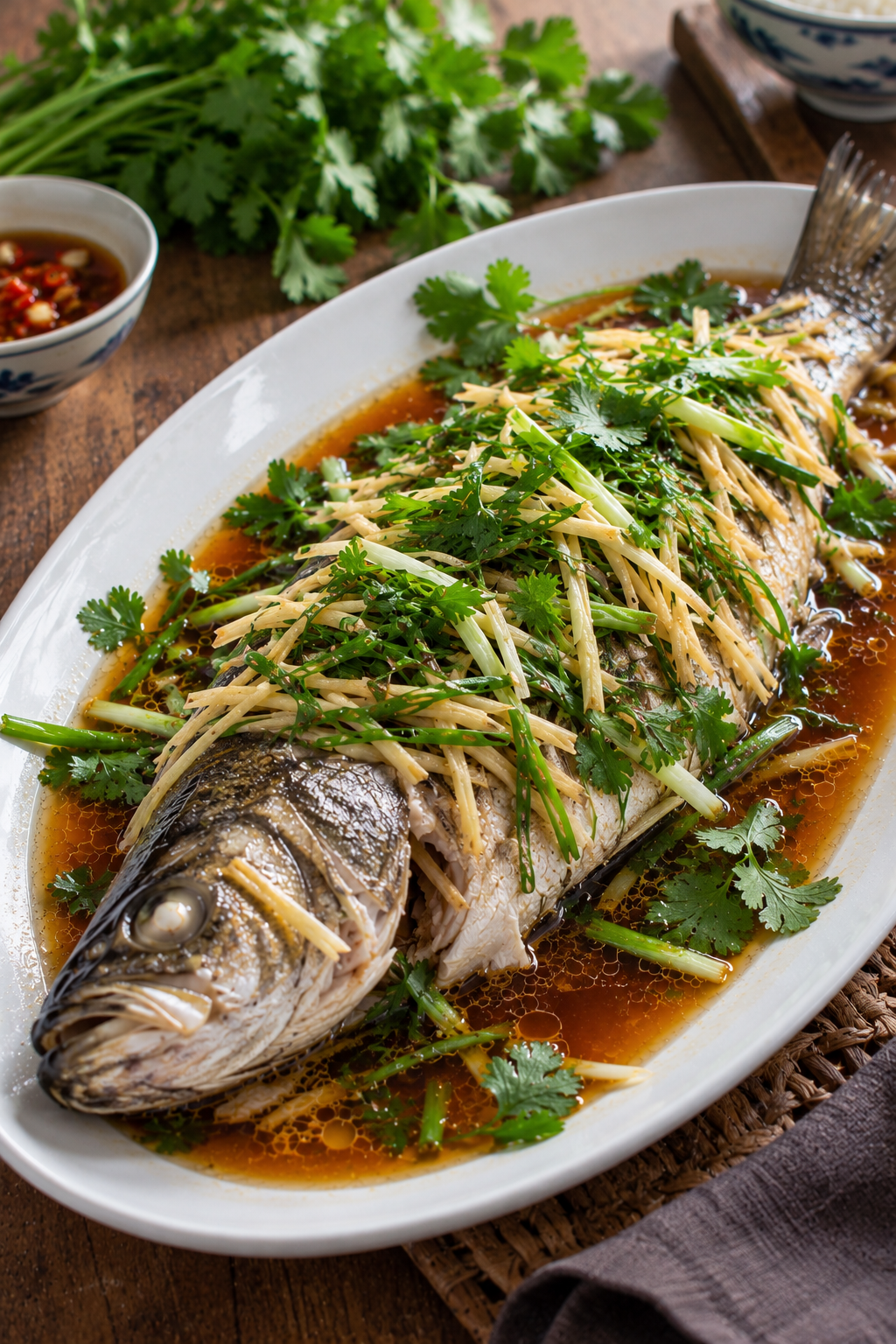
Chinese Steamed Fish with Ginger and Soy Sauce
Chinese steamed fish with ginger and soy sauce is a flavorful seafood dish featuring tender whole fish, fresh aromatics, and a savory sauce. Thin strips of ginger, green onions, and fresh cilantro add fragrance and freshness, while soy sauce creates a rich, balanced finish.
This Asian-inspired fish recipe is a wonderful option for a family dinner when you want something satisfying without deep-frying or preparing a complicated meal. Serve it with steamed white rice and your favorite vegetables to make a complete dinner at home.
The key to good steamed fish is simple: choose fresh fish, avoid overcooking it, and add the aromatic toppings at the right time. With a few everyday ingredients and a steamer, you can prepare this dish in about 30 minutes, depending on the size and thickness of the fish.
Why You’ll Love This Chinese Steamed Fish Recipe
- Fresh and aromatic: Ginger, scallions, and cilantro bring bright, fresh flavors to the fish.
- A savory sauce: Soy sauce, garlic, and a touch of sugar create a balanced combination of salty and slightly sweet flavors.
- A simple cooking method: Steaming keeps the fish moist when cooked properly.
- Easy to customize: You can use several types of whole fish and adjust the aromatics to your taste.
- Perfect with rice: The flavorful sauce is delicious spooned over freshly cooked rice.
What Is Chinese Steamed Fish?
Chinese steamed fish is a traditional style of fish preparation in which a whole fish or fish fillets are cooked with steam and served with aromatics and a savory seasoning. Many versions feature ginger, scallions, soy sauce, and sometimes hot oil poured over the fresh toppings to release their aroma.
The exact ingredients and preparation vary by region, household, and fish type. This home-cook-friendly version uses a whole fish, a ginger and scallion topping, and a simple soy-based sauce. It is inspired by Chinese-style steamed fish rather than a claim to represent every traditional regional preparation.
Ingredients You’ll Need
Choose a fresh, properly cleaned whole fish and prepare the aromatics before you start cooking. Steaming moves quickly once the fish is in the steamer, so having everything ready makes the process easier.
- 1 whole fish, about 1 1/2 to 2 pounds: Sea bass, red snapper, or another suitable whole fish works well. Ask your fishmonger to scale, gut, and clean it.
- 2 tablespoons soy sauce: Provides the main savory flavor. Use reduced-sodium soy sauce if preferred.
- 2 tablespoons water: Helps balance the soy sauce and creates a lighter serving sauce.
- 1 tablespoon Shaoxing cooking wine: Optional, for additional aroma. It can be omitted.
- 1 teaspoon sugar: Softens the salty edge of the sauce.
- 2-inch piece fresh ginger: Cut half into thin julienne strips and slice the remainder for the fish cavity.
- 4 scallions: Cut into thin strips or short lengths.
- 2 garlic cloves: Finely minced for the sauce.
- 1 tablespoon neutral cooking oil: Optional, for briefly heating and pouring over the aromatics.
- Fresh cilantro: A small handful for garnish.
- White or black pepper: A small pinch, optional.
Choosing the Best Fish
A fresh whole fish with firm flesh is a good choice for this recipe. Sea bass and red snapper are suitable options, while tilapia can work as a more accessible alternative. The important consideration is the fish’s size, thickness, freshness, and suitability for steaming.
Look for clear, bright eyes, moist skin, and a fresh, mild smell. The fish should be properly cleaned and scaled before cooking. If you buy frozen fish, thaw it safely in the refrigerator before preparing it.
A fish weighing around 1 1/2 to 2 pounds is a practical size for a family-style platter. Larger or thicker fish will require additional cooking time, so use the temperature and doneness checks rather than relying on the clock alone.
Equipment You’ll Need
- A steamer basket or steaming rack
- A large pot with a tightly fitting lid
- A heatproof plate that fits inside the pot
- A small saucepan for the sauce
- A sharp knife and cutting board
- A food thermometer for checking doneness
Choose a heatproof plate with enough space around the fish for steam to circulate. A plate that is too large for the pot can prevent the lid from closing properly, while a very deep plate may collect more liquid than you want.
How to Make Chinese Steamed Fish with Ginger and Soy Sauce
Step 1: Prepare the Fish
Pat the cleaned fish dry with paper towels. Make two or three shallow diagonal cuts on each side of the thickest part of the fish. These cuts help heat reach the flesh more evenly.
Place a few slices of ginger inside the cavity and arrange some ginger and scallion pieces underneath the fish on the heatproof plate. Keep some of the julienned ginger and scallions aside for the final topping.
Step 2: Prepare the Steamer
Add enough water to a large pot to create steady steam without allowing the water to touch the plate holding the fish. Bring the water to a boil, then place the steaming rack inside the pot.
Carefully set the plate with the fish on the rack. Cover the pot with a lid and maintain steady steaming throughout the cooking process. Use caution when lifting the lid because hot steam can cause burns.
Step 3: Steam Until the Fish Is Cooked
Steam a whole fish weighing approximately 1 1/2 to 2 pounds for about 10 to 15 minutes as an initial estimate. The actual time depends on the fish’s thickness, starting temperature, and the strength of the steam.
Check the thickest part of the fish with a food thermometer. Fish should reach an internal temperature of 145°F. The flesh should appear opaque and separate easily with a fork. If it has not reached the recommended temperature, continue steaming and check again.
Step 4: Make the Soy Sauce
While the fish cooks, combine the soy sauce, water, optional Shaoxing cooking wine, sugar, and minced garlic in a small saucepan.
Warm the mixture over low to medium heat, stirring until the sugar dissolves and the sauce is hot. Let it simmer briefly, then remove it from the heat. Avoid reducing it too much because the sauce should remain easy to spoon over the fish.
Step 5: Add the Aromatics
When the fish is cooked, carefully remove the plate from the steamer. If a large amount of watery cooking liquid has collected on the plate, carefully spoon off some of it while keeping the fish moist.
Scatter the remaining julienned ginger and scallions over the fish. Spoon the warm soy sauce over the fish and around the platter. Finish with fresh cilantro.
For an extra aromatic finish, heat the optional neutral oil in a small saucepan until hot but not smoking. Carefully drizzle it over the ginger and scallions. The oil should sizzle gently and release their fragrance. Keep your hands and face away from splattering oil.
Step 6: Serve Immediately
Serve the steamed fish while hot, with the soy sauce spooned over the flesh. Add extra cilantro or scallions if desired, and bring steamed rice to the table so everyone can enjoy the flavorful sauce.
Tips for Tender, Flavorful Steamed Fish
Do Not Overcook the Fish
Overcooking can make fish dry and firm. Start checking the fish near the lower end of the estimated cooking time, especially if it is smaller or thinner than the suggested size. A thermometer provides a more reliable doneness check than appearance alone.
Slice the Ginger Thinly
Thin strips distribute easily over the fish and release their fragrance into the sauce. Fresh ginger is especially useful here because its bright, slightly spicy flavor balances the savory soy sauce.
Keep the Steam Steady
Make sure the water is steaming before adding the fish. Keep the lid closed as much as possible during cooking so the temperature remains consistent. Check the water level if the steaming process takes longer than expected.
Balance the Sauce to Your Taste
Soy sauce brands vary in saltiness. If the sauce tastes too strong, add a little water. If you prefer a slightly sweeter flavor, add a small pinch of sugar. Taste the sauce before pouring it over the fish.
Add Fresh Herbs at the End
Cilantro and fresh scallions provide a brighter flavor when added near the end. Adding them too early can soften their texture and diminish their fresh appearance.
Common Mistakes to Avoid
- Using an oversized fish for the cooking time: A larger fish takes longer to cook. Always check the thickest part for doneness.
- Letting the water touch the plate: The fish should be cooked by steam rather than submerged in the pot’s water.
- Adding too much soy sauce: A concentrated sauce can overpower the delicate flavor of the fish. Dilute it with water when needed.
- Skipping the fish preparation: Scaling, gutting, and cleaning the fish properly are essential before steaming.
- Pouring oil that is smoking heavily: Hot oil should be handled carefully and should not be allowed to smoke excessively.
- Leaving the fish at room temperature for too long: Serve promptly and refrigerate leftovers within two hours, or within one hour when the ambient temperature exceeds 90°F.
Variations to Try
Steamed Fish with Extra Ginger
If you enjoy a stronger ginger flavor, increase the amount of fresh ginger slightly. Use part during steaming and reserve the rest for the final topping.
Spicy Chinese Steamed Fish
Add thinly sliced fresh red chili or a small amount of chili oil to the finished dish. Adjust the heat gradually so the spice complements rather than overwhelms the fish.
Steamed Fish with Reduced Sodium
Choose reduced-sodium soy sauce and add water to taste. Fresh ginger, scallions, garlic, and cilantro provide plenty of aroma without requiring additional soy sauce.
Steamed Fish Fillets
Boneless fish fillets can be used if a whole fish is unavailable. Place them in a heatproof dish with ginger and scallions, then steam until they reach 145°F. Fillets usually cook faster than a whole fish, so begin checking them early.
What to Serve with Chinese Steamed Fish
This fish is especially good with simple sides that absorb the savory sauce without competing with its flavor.
- Steamed jasmine rice: A classic pairing for the soy-based sauce.
- Garlic bok choy: A fresh vegetable side with a mild, savory flavor.
- Stir-fried green beans: Add a little garlic for an easy vegetable dish.
- Steamed broccoli: A simple option that works well for family dinners.
- Light cucumber salad: Provides a crisp, refreshing contrast to the warm fish.
For a complete meal, serve the fish with rice and one or two vegetables. This keeps the preparation manageable while giving everyone a balanced variety of flavors and textures.
How to Store Leftover Steamed Fish
Allow leftovers to cool briefly, then transfer the fish and sauce to a shallow, airtight food storage container. Refrigerate within two hours of cooking, or within one hour if the room or outdoor temperature is above 90°F.
Store cooked fish in the refrigerator at 40°F or below and use it within three to four days. For longer storage, freeze it in a suitable airtight container. For best quality, use frozen cooked fish within about three months.
How to Reheat Steamed Fish
Reheat leftovers gently in a covered, heatproof dish in the oven or in a steamer until the fish reaches 165°F. Add a small splash of water if the sauce has thickened or the fish looks dry. Avoid repeated reheating because the delicate flesh can become dry and break apart.
For the best texture, store the fish with its sauce and reheat only the portion you intend to eat.
Frequently Asked Questions
What is the best fish for Chinese steamed fish?
Sea bass and red snapper are good choices for steaming whole. Other suitable fish can also work, provided they are fresh, properly cleaned, and sized appropriately for your steamer.
How long does it take to steam a whole fish?
A whole fish weighing approximately 1 1/2 to 2 pounds may take around 10 to 15 minutes, but thickness and cooking conditions affect the time. Check that the thickest part reaches 145°F before serving.
Can I make Chinese steamed fish without Shaoxing wine?
Yes. Shaoxing cooking wine is optional in this recipe. You can leave it out and use the soy sauce, water, ginger, scallions, and garlic for a flavorful result.
Why is my steamed fish watery?
Fish releases moisture during steaming, and some liquid may collect on the plate. Carefully remove excess liquid before adding the finishing sauce, leaving enough moisture to keep the fish tender.
Can I use fish fillets instead of a whole fish?
Yes. Fillets are a convenient alternative, although their cooking time is generally shorter. Steam until the thickest portion reaches 145°F and avoid leaving them in the steamer longer than necessary.
Is Chinese steamed fish served with rice?
Yes. Steamed white rice is a natural pairing because it absorbs the savory sauce. You can also serve the fish with noodles or steamed vegetables.
Final Thoughts
Chinese steamed fish with ginger and soy sauce is a practical way to prepare a flavorful seafood dinner with a short ingredient list. Fresh ginger, scallions, cilantro, and a balanced soy-based sauce complement the delicate fish without requiring deep-frying or a complicated cooking process.
Choose a fresh fish, keep the steam steady, and check the internal temperature to help achieve tender results. Serve it hot with rice and vegetables for a satisfying meal that brings Asian-inspired flavors to your home kitchen.
Recipe Card: Chinese Steamed Fish with Ginger and Soy Sauce
Recipe summary: Whole steamed fish topped with ginger, scallions, cilantro, and a savory soy-based sauce.
Prep time: 15 minutes
Cook time: 15 minutes (estimated)
Total time: 30 minutes (estimated)
Yield: 2 to 4 servings
Cooking method: Steaming
Cuisine inspiration: Chinese-inspired
Ingredients
- 1 whole fish, 1 1/2 to 2 pounds, scaled, gutted, and cleaned
- 2 tablespoons soy sauce
- 2 tablespoons water
- 1 tablespoon Shaoxing cooking wine, optional
- 1 teaspoon sugar
- 2-inch piece fresh ginger, thinly sliced and julienned
- 4 scallions, cut into strips or short lengths
- 2 garlic cloves, minced
- 1 tablespoon neutral cooking oil, optional
- 1 small handful fresh cilantro
- A pinch of pepper, optional
Instructions
- Pat the cleaned fish dry. Make two or three shallow diagonal cuts on each side of the thickest portion.
- Place some ginger and scallions inside the cavity and underneath the fish on a heatproof plate.
- Bring water to a boil in a large pot fitted with a steaming rack. Keep the water below the plate.
- Place the fish in the steamer, cover, and steam for approximately 10 to 15 minutes, depending on its size and thickness. Check that the thickest portion reaches 145°F.
- Meanwhile, combine the soy sauce, water, optional Shaoxing wine, sugar, and minced garlic in a small saucepan. Warm gently until the sugar dissolves.
- Carefully remove the cooked fish. Spoon off excess watery liquid from the plate if necessary.
- Top the fish with the remaining ginger, scallions, and cilantro. Pour the warm soy sauce mixture over the fish.
- If desired, heat the neutral oil until hot but not smoking, then carefully drizzle it over the aromatics.
- Serve immediately with steamed rice and vegetables.
Recipe Notes
- Sea bass and red snapper are suitable whole-fish options.
- Cooking time varies with fish thickness, so use a food thermometer rather than relying on time alone.
- Use reduced-sodium soy sauce and adjust the water to suit your taste.
- Shaoxing cooking wine and the finishing oil are optional.
Storage
Refrigerate leftovers promptly in an airtight container at 40°F or below and consume within three to four days. Reheat leftovers to 165°F. Freeze in an airtight container for longer storage, preferably using within about three months for best quality.
Nutrition information: Not calculated. Actual nutrition per serving depends on the fish species, edible portion, sauce consumption, and serving size.