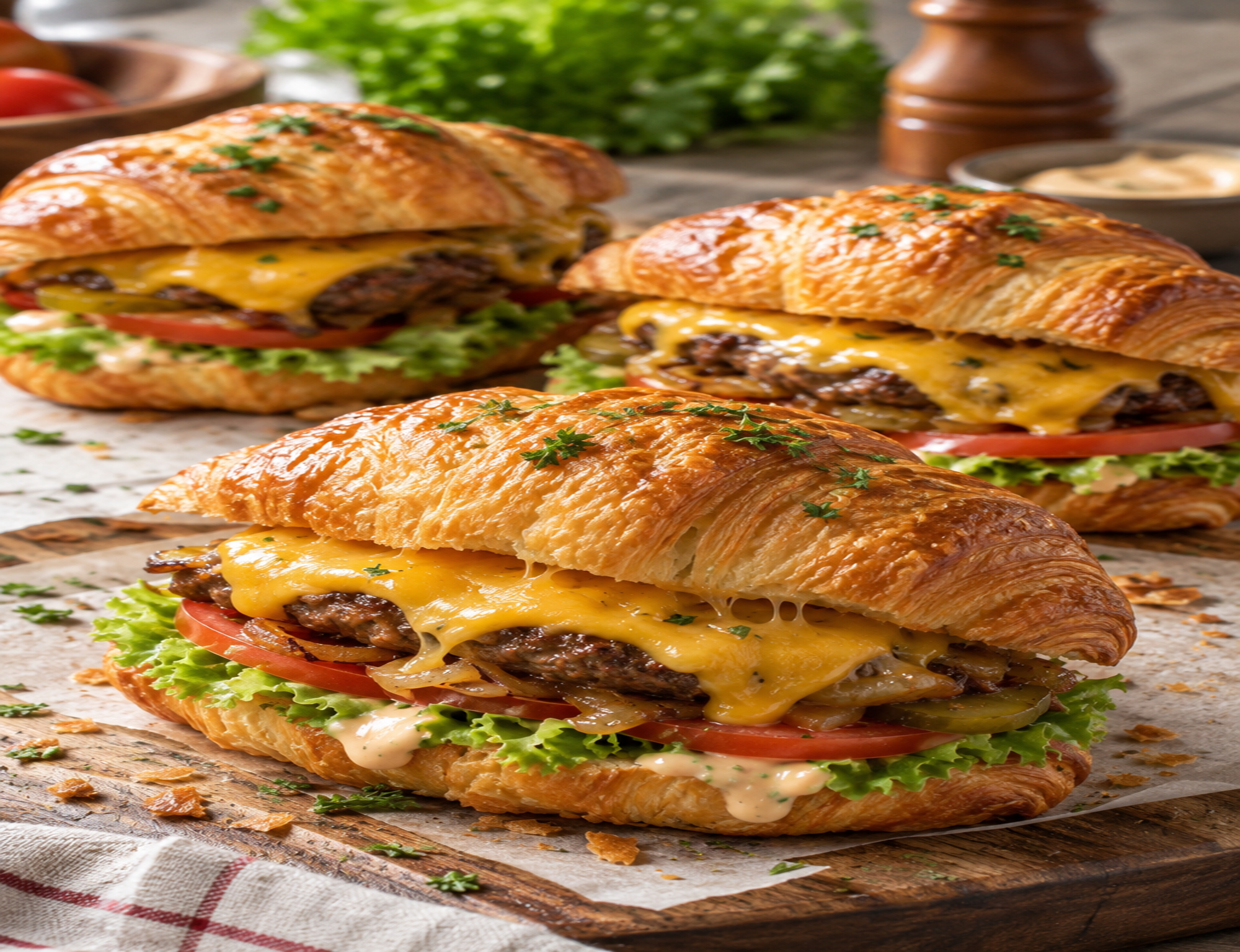
Croissant Cheeseburger Recipe with Juicy Beef and Melted Cheddar
There is something especially satisfying about swapping a standard burger bun for a buttery, flaky croissant. The crisp pastry gives way to a juicy beef patty, melted cheddar, sweet caramelized onions, tangy pickles, fresh tomato, crisp lettuce, and a creamy burger sauce.
This croissant cheeseburger is rich without being complicated. The trick is to build it in layers so the croissant stays crisp while the cheese melts over the hot beef. It makes an impressive weekend lunch, a relaxed brunch, or a restaurant-style dinner you can make in your own kitchen.
Why a Croissant Works So Well for a Cheeseburger
A croissant changes the character of a burger immediately. Instead of a soft, neutral bun, you get layers of laminated pastry with a buttery flavor and delicate crunch.
Because the pastry is already rich, the toppings need some contrast. Tangy pickles, fresh tomato, crisp lettuce, and caramelized onions keep the burger from tasting one-dimensional. The cheddar adds savory richness while the sauce ties everything together.
The other important detail is temperature. The beef should be hot enough to melt the cheddar naturally, while the croissant should be warmed without becoming soft or greasy.
Ingredients You’ll Need
For the burgers
- 1 pound ground beef, preferably 80/20
- 1 teaspoon kosher salt
- 1/2 teaspoon freshly ground black pepper
- 1/2 teaspoon garlic powder
- 1/2 teaspoon onion powder
- 4 slices sharp cheddar cheese
- 4 large buttery croissants
For the toppings
- 1 medium yellow onion, thinly sliced
- 1 tablespoon butter
- 1 small tomato, sliced
- 4 lettuce leaves
- 1/2 cup sliced dill pickles
For the burger sauce
- 1/3 cup mayonnaise
- 2 tablespoons ketchup
- 1 tablespoon finely chopped pickles
- 1 teaspoon pickle juice
- 1/4 teaspoon garlic powder
- Pinch of black pepper
The Small Details That Make the Burger Better
Use ground beef with enough fat. An 80/20 blend is a practical choice because the fat helps keep the patty juicy while creating flavorful browned edges.
Don’t overwork the beef. Form the patties gently. Compressing the meat too much can produce a dense burger instead of one with a tender, juicy bite.
Choose a sturdy croissant. An extremely delicate pastry can collapse under the weight of the toppings. A medium-to-large croissant with a defined exterior and flaky layers works particularly well.
Use sharp cheddar for contrast. Sharp cheddar brings enough flavor to stand up to the buttery pastry and beef without requiring a large amount of cheese.
How to Make a Croissant Cheeseburger
1. Make the burger sauce
Stir together the mayonnaise, ketchup, chopped pickles, pickle juice, garlic powder, and black pepper. Taste and adjust the pickle juice if you want a sharper sauce.
Refrigerate the sauce while you cook the other components. Chilling gives the flavors a little time to come together.
2. Caramelize the onions
Melt the butter in a skillet over medium-low heat. Add the sliced onions and cook for about 15 to 20 minutes, stirring occasionally.
The onions should gradually soften and become golden brown. If they begin browning too quickly, reduce the heat. Caramelization takes time; rushing this stage can leave the onions browned on the outside but still harsh and underdeveloped in flavor.
3. Shape and season the patties
Divide the ground beef into four portions and gently shape each into a patty slightly wider than the croissants. Season both sides with kosher salt, black pepper, garlic powder, and onion powder just before cooking.
Making the patties slightly wider than the pastry helps compensate for the small amount of shrinkage that happens during cooking.
4. Cook the beef
Heat a heavy skillet or griddle over medium-high heat. Cook the patties until they develop a deeply browned crust and reach a safe internal temperature for ground beef. An instant-read thermometer is the most reliable way to check doneness.
Place a slice of cheddar on each patty during the final minute of cooking. Cover the skillet briefly to help the cheese melt evenly.
5. Warm the croissants
Split the croissants horizontally and place them cut-side up on a baking sheet. Warm them in a 350°F oven for about 3 to 5 minutes, just until heated through.
Don’t overheat them. The goal is a warm, lightly crisp exterior rather than a pastry that becomes dry.
6. Assemble the burgers
Spread the burger sauce over the bottom half of each croissant. Add lettuce and tomato, followed by the hot cheeseburger patty. Spoon the caramelized onions over the cheese, then add pickles and the croissant top.
Serve immediately while the beef is juicy, the cheddar is soft, and the pastry still has some crispness.
How to Keep the Croissant from Getting Soggy
This is probably the biggest practical challenge with a croissant burger. The pastry absorbs moisture more readily than a conventional burger bun.
Start by warming the croissant rather than using it straight from the refrigerator. A slightly crisp exterior provides more structural support.
Next, avoid putting a large amount of wet sauce directly against the pastry. A layer of lettuce between the sauce and juicy tomato can provide a useful barrier. Finally, assemble the burger immediately before serving.
If you’re preparing several burgers for a group, keep the components separate and assemble them shortly before everyone eats.
Cast Iron or Stainless Steel for the Patties?
| Feature | Cast Iron | Stainless Steel |
|---|---|---|
| Heat retention | Excellent | Very good |
| Browning | Excellent | Excellent when properly preheated |
| Weight | Heavy | Lighter |
| Best use | Deep burger crust | Versatile everyday cooking |
Either pan can produce a great burger. Cast iron is particularly forgiving when you want strong heat retention and a deeply browned crust. Stainless steel is more versatile if you want one pan that can handle a variety of cooking tasks.
Common Croissant Burger Mistakes
The patty is dry
The most common causes are very lean beef, excessive handling, or cooking the patty for too long. Use a moderately fatty ground beef blend and check the internal temperature rather than relying only on cooking time.
The cheese isn’t melting
Add the cheddar while the patty is still hot and cover the pan briefly. The trapped heat helps the cheese soften without requiring the beef to remain on the heat for too long.
The croissant falls apart
Too many wet toppings can overwhelm delicate pastry. Use moderate amounts of sauce and tomato, and choose a croissant with a sturdy structure.
The onions taste bitter
The pan was probably too hot. Caramelized onions need gradual cooking. Lower the heat and give them enough time to soften and develop sweetness.
Easy Variations
Bacon cheddar croissant burger: Add two strips of crisp bacon for extra smoky flavor and crunch.
Spicy version: Add sliced jalapeños and a little hot sauce to the burger sauce.
Mushroom Swiss: Replace the cheddar with Swiss cheese and add sautéed mushrooms.
Breakfast-style: Add a fried egg and replace the pickles with a small amount of crispy hash browns.
Smash-style: Use smaller portions of beef and press them thinly against a very hot cooking surface for extra browned edges.
What to Serve with a Croissant Cheeseburger
This burger is rich enough that lighter sides work especially well. A crisp green salad, vinegar-based slaw, fresh fruit, or roasted vegetables can balance the buttery pastry and cheese.
For a more traditional burger dinner, serve it with oven-baked fries or crispy potato wedges. A cold sparkling drink, iced tea, or lemonade also works nicely with the savory, rich flavors.
If you’re building a larger weekend meal around burgers, a homemade crispy potato side can complement the buttery croissant without competing with the main sandwich.
Make-Ahead, Storage, and Reheating
The sauce and caramelized onions can be prepared ahead of time and refrigerated. The burger patties can also be shaped several hours before cooking and kept covered in the refrigerator.
For food safety, keep raw ground beef refrigerated and separate from ready-to-eat ingredients. Cook ground beef to a safe internal temperature rather than judging doneness by color alone.
Fully assembled croissant burgers are best eaten immediately. If you have leftovers, refrigerate the components separately when possible. Reheat the beef and croissant separately, then assemble with fresh lettuce and tomato.
A toaster oven or conventional oven is preferable to microwaving the assembled sandwich because dry heat helps restore some of the croissant’s crisp texture.
Recipe Card
| Prep Time | 20 minutes |
| Cook Time | 25 minutes |
| Total Time | 45 minutes |
| Servings | 4 burgers |
| Difficulty | Easy to Moderate |
| Cuisine | American-inspired |
| Course | Lunch or Dinner |
| Calories | Approximately 750–850 calories per serving, estimated |
Frequently Asked Questions
Can I use frozen croissants?
Yes. Bake them according to their package directions and let them cool slightly before assembling the burgers. A fully baked croissant is important because the pastry needs enough structure to hold the filling.
What ground beef is best for croissant burgers?
An 80/20 ground beef blend is a good choice for a juicy patty with plenty of beef flavor. Leaner beef can work, but it is easier to overcook.
Can I use a different cheese?
Absolutely. American cheese melts exceptionally well, while Swiss, provolone, pepper jack, or mild cheddar can change the flavor profile.
How do I make the croissant crispy again?
Warm the split croissant in a 350°F oven for a few minutes. Avoid prolonged heating because the pastry can dry out quickly.
Can I make the burger patties ahead?
Yes. Shape the patties several hours ahead, cover them, and refrigerate until ready to cook. Keep raw beef properly chilled and separate from other ingredients.
Can I make these in an air fryer?
You can warm the croissants in an air fryer, but the beef is generally easier to control in a skillet or griddle. If using an air fryer for the patties, follow your appliance’s instructions and verify the internal temperature with a thermometer.
Why does my croissant burger get soggy?
Excess sauce, juicy tomato, and steam from the hot beef can soften the pastry. Warm the croissant first, moderate the wet ingredients, and assemble immediately before serving.
Can I freeze croissant cheeseburgers?
Freezing the fully assembled burger is not ideal because lettuce, tomato, and sauce can lose their texture. Freeze or refrigerate the cooked beef separately and assemble the sandwich fresh.
More Recipes to Build Around This Burger
For a similar comfort-food direction, consider developing recipes such as caramelized onion smash burgers, bacon cheddar sliders, crispy chicken croissant sandwiches, or spicy jalapeño cheeseburgers. These ideas can form a useful burger-and-sandwich recipe collection without making the recipes themselves interchangeable.
If you’re looking for another hearty dinner with a different protein, our savory chicken dinner recipe is another option to keep in your weekly rotation.
Final Tips for the Best Croissant Cheeseburger
Keep the beef simple, give the onions time to caramelize, and don’t overload the pastry. The best version has contrast: crisp croissant layers, a deeply browned beef crust, stretchy cheddar, sweet onions, acidic pickles, juicy tomato, crisp lettuce, and a creamy sauce.
Most importantly, assemble it at the last minute. That short window between construction and serving is what keeps the croissant flaky instead of soggy and lets the melted cheese, hot beef, and fresh toppings come together in every bite.