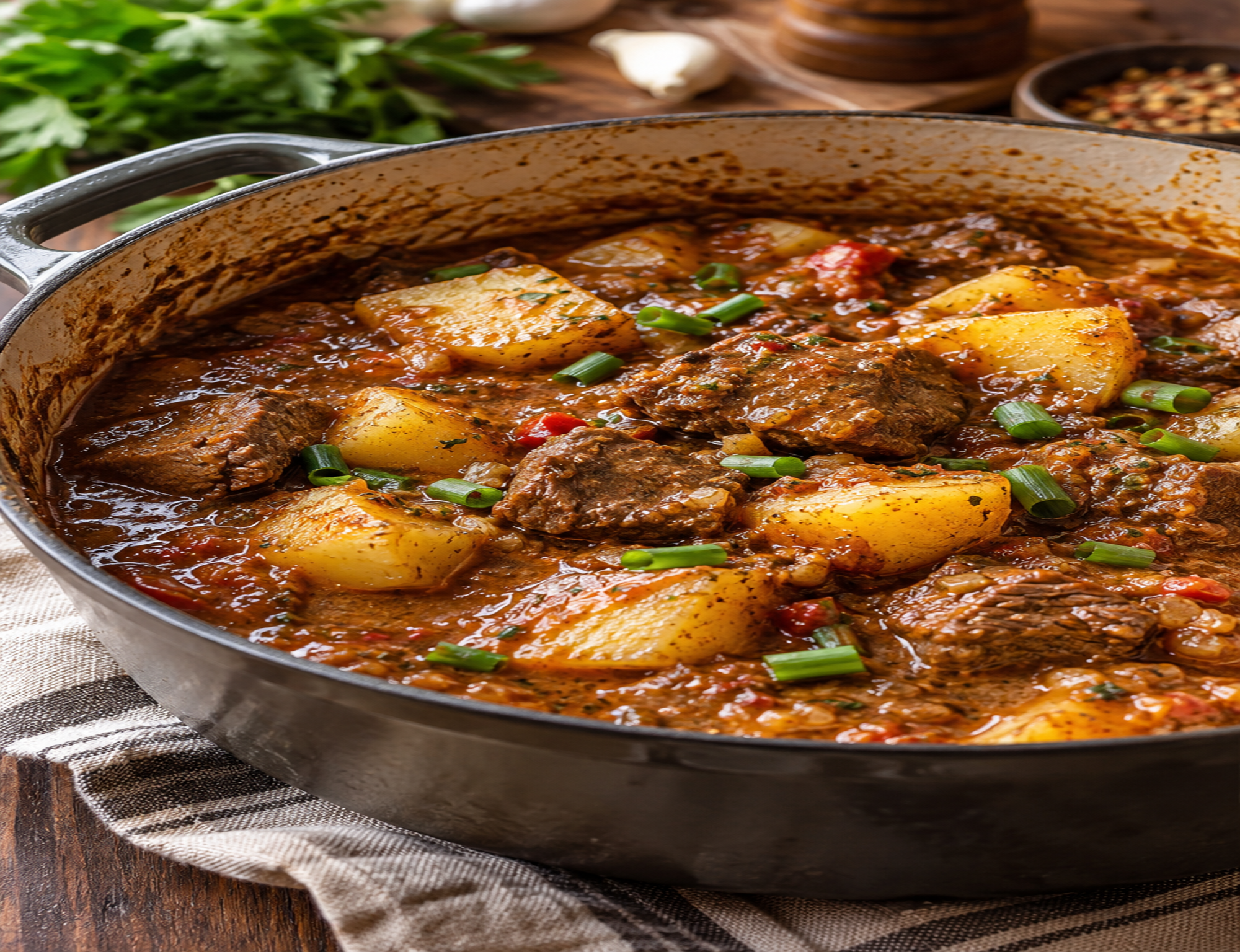
Hearty Beef Stew with Potatoes for Cozy One-Pot Dinners
There are dinners that feel like a project, and then there are dinners that simply need time. Beef stew belongs firmly in the second category. Once the beef is browned and the ingredients are tucked into a pot, gentle cooking does most of the work.
This hearty beef stew with potatoes is built around tender chunks of beef, creamy potatoes, aromatic vegetables, and a deeply savory gravy. The finished stew should be thick enough to coat a spoon but still loose enough to ladle generously into a bowl. It is the kind of meal that tastes even better when served with something warm and crusty for soaking up the sauce.
The key is not rushing the beef. A good sear develops the savory foundation of the dish, while slow simmering gives the connective tissue in tougher cuts of beef time to soften. The potatoes are added at the right point so they become tender without completely disappearing into the gravy.
Why This Beef Stew Works
The appeal of this stew comes from contrast. The beef becomes deeply browned on the outside and fork-tender inside, while the potatoes absorb some of the surrounding gravy without losing their shape. Tomatoes and aromatic vegetables add sweetness and acidity, while herbs and black pepper round out the flavor.
Another advantage is that everything happens in one heavy pot. That makes this a particularly useful recipe for a family dinner when you want something substantial without filling the kitchen with cookware.
Ingredients You’ll Need
- 2 pounds beef chuck roast, cut into 1½-inch pieces
- 1½ pounds Yukon Gold or yellow potatoes, cut into large chunks
- 2 tablespoons olive oil
- 1 medium yellow onion, diced
- 3 cloves garlic, minced
- 2 tablespoons tomato paste
- 1 cup crushed tomatoes
- 3 cups beef broth
- 1 tablespoon Worcestershire sauce
- 1 teaspoon smoked paprika
- 1 teaspoon dried thyme
- ½ teaspoon dried oregano
- 1 teaspoon kosher salt**, plus more to taste
- ½ teaspoon freshly ground black pepper
- 1 cup diced carrots
- ½ cup diced celery
- ½ cup diced red bell pepper
- 2 tablespoons chopped fresh parsley or green onions, for finishing
Choosing the Right Beef
For stew, beef chuck is one of the most practical choices because it contains enough connective tissue and fat to remain flavorful during a long simmer. Lean cuts can become dry before the stew develops the texture you want.
Cut the beef into pieces that are roughly the same size. Larger chunks are easier to keep juicy during a long cook, while very small pieces can become tough and disappear into the sauce.
The Cooking Method That Makes the Difference
Heat a large heavy-bottomed Dutch oven or deep pot over medium-high heat. Add the olive oil and allow it to become hot before adding the beef.
Brown the beef in batches rather than crowding the pot. Each piece should have enough contact with the hot surface to develop a dark brown crust. If the pot becomes crowded, the meat releases moisture and begins to steam instead of searing.
Transfer the browned beef to a plate. Add the onion, carrots, celery, and bell pepper to the same pot. Cook for several minutes, scraping up the browned bits from the bottom as the vegetables release moisture.
Add the garlic and tomato paste. Stir for about one minute. Cooking the tomato paste briefly helps deepen its flavor before the liquid is added.
Return the beef to the pot and add the crushed tomatoes, beef broth, Worcestershire sauce, paprika, thyme, oregano, salt, and black pepper. Bring everything to a gentle simmer.
When to Add the Potatoes
Potatoes do not need the same cooking time as beef chuck. Adding them too early can leave you with broken-down potatoes and a stew that is thicker than intended.
After the beef has simmered gently for about 60 minutes, add the potato chunks. Continue cooking for another 30 to 45 minutes, or until the beef is very tender and the potatoes can be pierced easily with a fork.
Keep the heat low enough that the stew barely bubbles. Aggressive boiling can make the exterior of the beef tighten while causing delicate potato pieces to break apart.
How to Know When the Stew Is Done
Time is useful, but texture is the better indicator. The beef should yield easily when pressed with a fork. The potatoes should be tender in the center while still holding their shape.
If the gravy looks too thin, leave the lid partially uncovered during the final portion of cooking so excess moisture can evaporate. If it becomes too thick, add a small amount of beef broth until the consistency returns to a spoonable gravy.
For meat dishes, do not rely solely on color to judge safety. Use a reliable food thermometer when appropriate and follow USDA guidance for safe handling and cooking of beef.
Cast Iron or Stainless Steel for Beef Stew?
| Feature | Heavy Cast-Iron Pot | Stainless-Steel Pot |
|---|---|---|
| Heat retention | Excellent | Good |
| Long simmering | Excellent | Very good |
| Developing browned fond | Excellent | Excellent |
| Weight | Heavy | Lighter |
| Best use | Slow, steady cooking | Versatile everyday cooking |
A heavy pot is particularly helpful because stable heat makes it easier to maintain the gentle simmer this stew needs. Stainless steel can also produce excellent results, especially when the cook pays attention to heat control and avoids letting the liquid boil aggressively.
Common Beef Stew Problems and Easy Fixes
Why is my beef still tough?
Usually, it needs more time rather than more heat. Beef chuck becomes tender as connective tissue gradually breaks down. Keep the stew at a gentle simmer and continue cooking until the meat yields easily.
Why is my gravy watery?
Too much liquid or insufficient evaporation can leave the stew thin. Remove the lid and simmer gently for a little longer. Stir occasionally and stop when the gravy coats the back of a spoon.
Why did my potatoes fall apart?
They may have been cut too small or cooked for too long. Use larger chunks and add them later in the cooking process.
Why doesn’t my stew taste rich enough?
Check the browning first. Beef needs strong contact with the hot cooking surface to develop the deep flavors associated with a satisfying stew. Also taste the finished gravy for salt and acidity before serving.
Small Details That Improve the Flavor
Do not skip the browning stage. Those browned bits left on the bottom of the pot become part of the flavor once the vegetables and broth loosen them.
Season in layers rather than adding all the salt at the end. The beef, vegetables, broth, and potatoes each benefit from seasoning as they cook, but always taste before adding the final amount.
Finally, give the stew a few minutes to rest before serving. The gravy will settle slightly, and the flavors become more integrated.
Make-Ahead and Meal Prep Tips
This stew is an excellent make-ahead dinner. Once cooled, transfer it to shallow airtight containers and refrigerate promptly. For best quality, use refrigerated leftovers within 3 to 4 days.
For longer storage, freeze the cooled stew in airtight freezer-safe containers. Leave a little room for expansion. Thaw refrigerated portions safely before reheating.
Reheat gently on the stovetop over medium-low heat, stirring occasionally. Add a splash of beef broth or water if the gravy has thickened considerably in the refrigerator.
What to Serve With Beef and Potato Stew
Because the stew already contains beef and potatoes, simple sides work best. Crusty French bread, toasted sourdough, steamed green beans, a crisp green salad, or roasted vegetables can add contrast without competing with the main dish.
A spoonful of fresh parsley or sliced green onions just before serving also brings a fresh note to the rich gravy.
Recipe Card
- Prep Time: 20 minutes
- Cook Time: 1 hour 45 minutes
- Total Time: 2 hours 5 minutes
- Servings: 6
- Difficulty: Easy to Moderate
- Cuisine: American-inspired comfort food
- Course: Dinner
- Estimated Calories: Approximately 480 calories per serving
Frequently Asked Questions
Can I use another cut of beef?
Yes. Other braising-friendly cuts can work, but cooking time may vary. Choose a cut with enough connective tissue to benefit from slow cooking.
Can I make this beef stew without tomatoes?
Yes. You can reduce or omit the tomatoes and increase the beef broth slightly. The resulting gravy will have a different flavor and color.
Can I add the potatoes at the beginning?
You can, but they are more likely to become very soft or break apart. Adding them later gives you better control over their final texture.
Can I cook this stew in a slow cooker?
Yes. Browning the beef and vegetables first will provide more developed flavor, then the ingredients can be transferred to a slow cooker. Follow the appliance manufacturer’s guidance for cooking times and liquid levels.
Can I make the stew thicker?
Yes. Reduce the liquid uncovered during the final stage. Another option is to mash a small amount of the cooked potato directly into the gravy.
What potatoes are best for beef stew?
Yukon Gold potatoes are particularly useful because they become creamy while generally holding their shape. Russet potatoes can also work but tend to break down more readily.
How long does beef stew last in the refrigerator?
Store it promptly in the refrigerator and use leftovers within 3 to 4 days. Reheat thoroughly before serving.
Can I freeze beef stew with potatoes?
Yes. The stew can be frozen, although potatoes may become somewhat softer after thawing and reheating. For the best texture, freeze portions in airtight freezer-safe containers.
More Recipes to Add to the Same Dinner Rotation
- Slow-Simmered Beef and Vegetable Stew
- Classic Pot Roast with Root Vegetables
- Garlic Herb Beef with Roasted Potatoes
- Hearty Chicken and Vegetable Soup
Final Thoughts
A satisfying beef stew does not depend on complicated ingredients. It depends on a few important techniques: brown the beef properly, build flavor in the same pot, maintain a gentle simmer, and add the potatoes at the right time.
The result is a deeply savory, comforting meal with tender beef, soft golden potatoes, and a rich gravy that practically begs for a piece of crusty bread. It is simple enough for a weeknight and substantial enough to make when you want dinner to feel especially cozy.