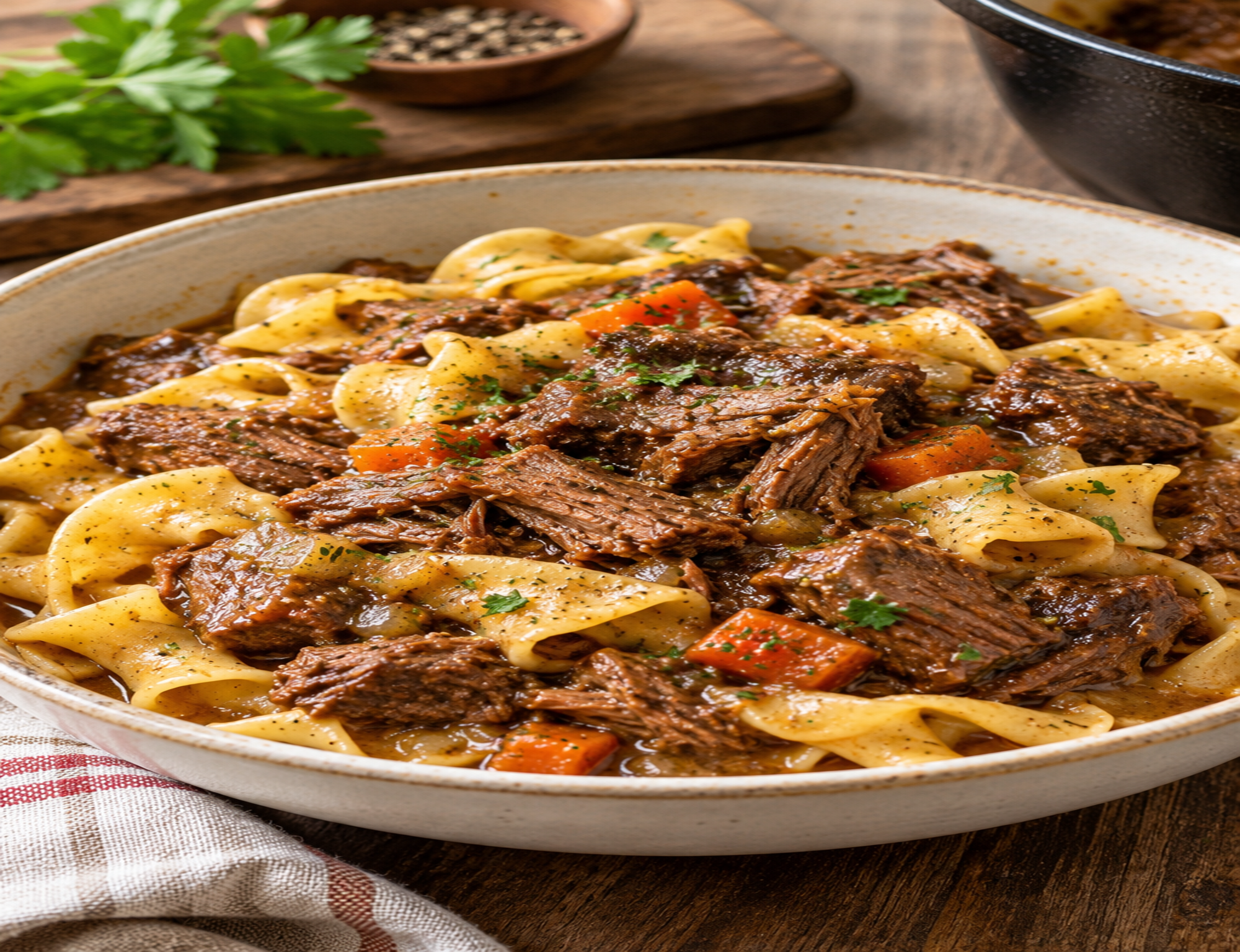
Slow Cooker Beef and Noodles with Rich Gravy
There is something especially satisfying about a bowl of beef and noodles when the beef has been cooked slowly enough to become tender and deeply savory. The noodles soak up some of the rich gravy, while carrots and onions add sweetness and texture to every bite.
This version is designed around that classic comfort-food combination: fork-tender beef, wide egg noodles, vegetables, and a glossy brown gravy. The slow cooker does most of the work, making it a practical dinner when you want something substantial without spending the entire evening at the stove.
Why This Beef and Noodles Recipe Works
The key is giving the beef enough time to break down. A suitable beef chuck roast contains connective tissue that gradually softens during slow cooking. Instead of trying to make the meat tender quickly, the slow cooker gives it time to become shreddable and juicy.
The gravy benefits from the same process. Beef juices, aromatics, and seasonings mingle as they cook, creating a sauce with considerably more depth than a quick pan gravy.
Wide egg noodles are especially useful here because their broad surface catches the gravy. They should remain tender without becoming completely lost in the sauce.
Ingredients
For the Slow-Cooked Beef
- 2 1/2 pounds beef chuck roast, trimmed and cut into large chunks
- 1 1/2 teaspoons kosher salt
- 1 teaspoon freshly ground black pepper
- 1 tablespoon olive oil
- 1 medium yellow onion, sliced
- 3 medium carrots, peeled and cut into thick pieces
- 3 cloves garlic, minced
- 2 cups beef broth
- 1 tablespoon Worcestershire sauce
- 1 tablespoon tomato paste
- 1 teaspoon dried thyme
- 1/2 teaspoon dried rosemary
- 1 bay leaf
For the Noodles
- 12 ounces wide egg noodles
- 2 tablespoons unsalted butter
- 1/2 cup of the cooking gravy, as needed
- 2 tablespoons chopped fresh parsley
Choosing the Beef
Beef chuck is a natural choice for this recipe because it becomes tender during prolonged cooking. Look for a roast with some visible marbling rather than an extremely lean cut. That fat and connective tissue contribute to the texture of the finished dish.
Cutting the roast into large chunks before cooking creates more seasoned surface area while still leaving pieces substantial enough to shred later.
How to Make Slow Cooker Beef and Noodles
1. Season and Brown the Beef
Pat the beef dry with paper towels and season it evenly with salt and pepper. Heat the olive oil in a large skillet over medium-high heat.
Brown the beef in batches rather than crowding the pan. Give each piece a couple of minutes on several sides until a deep brown crust develops.
This step is optional from a convenience standpoint, but it adds another layer of roasted flavor to the finished gravy.
2. Build the Slow Cooker Base
Transfer the browned beef to the slow cooker. Add the sliced onion, carrots, and garlic.
Whisk together the beef broth, Worcestershire sauce, and tomato paste, then pour the mixture around the beef. Add the thyme, rosemary, and bay leaf.
The liquid should surround the beef without completely submerging every piece.
3. Slow Cook Until Tender
Cover and cook on LOW for approximately 7 to 8 hours, or until the beef is very tender and easily pulls apart with a fork.
A slow cooker can vary considerably from one model to another, so use tenderness as the practical finishing cue rather than relying on the clock alone.
4. Shred the Beef
Transfer the cooked beef to a large plate or shallow bowl. Remove the bay leaf and any unusually large pieces of connective tissue.
Use two forks to pull the beef into irregular chunks and shreds. Avoid shredding it too finely. Larger pieces provide a much better contrast with the soft noodles.
5. Cook the Egg Noodles Separately
Bring a large pot of salted water to a boil and cook the egg noodles according to the package directions until just tender.
Drain well. Toss the noodles with butter, then add enough of the beef cooking liquid to lightly coat them.
Cooking the noodles separately gives you much more control over their texture. If they spend hours in the slow cooker, they can absorb too much liquid and become soft or broken.
6. Bring Everything Together
Return the shredded beef to the slow cooker and stir gently with the carrots and gravy. Taste and adjust the seasoning.
Divide the noodles among serving bowls and spoon the beef and gravy over the top. Finish with fresh parsley and a little freshly cracked black pepper.
The Small Details That Make a Difference
Don’t skip drying the beef. Moisture on the surface of the meat can interfere with browning. Patting it dry helps the exterior develop deeper color in the skillet.
Don’t crowd the pan. If several pieces of beef are packed together, they tend to steam rather than brown. Work in two or three batches if necessary.
Keep the noodles separate until serving. This is one of the most useful tricks for getting the right texture. The noodles can absorb gravy without sitting in hot liquid for hours.
Let the beef become genuinely tender. If a fork meets resistance, give it more time. Chuck roast often needs patience before its connective tissue has softened sufficiently.
What If the Gravy Is Too Thin?
Slow cooker liquids can vary depending on how much moisture the vegetables and beef release. If the gravy seems thinner than you want, transfer some of the liquid to a saucepan and simmer it over medium heat until slightly reduced.
For a thicker finish, you can also make a small cornstarch slurry by mixing 1 tablespoon cornstarch with 1 tablespoon cold water. Stir it into the hot gravy gradually and allow it to simmer briefly until thickened.
Avoid adding dry cornstarch directly to the slow cooker because it can form small lumps.
Slow Cooker vs. Stovetop Beef and Noodles
| Method | Main Advantage | Best Use |
|---|---|---|
| Slow cooker | Long, gentle cooking with minimal hands-on work | Busy days and make-ahead dinners |
| Stovetop | Faster control over reduction and texture | When you want dinner sooner |
The slow cooker is particularly convenient when tenderness is the priority. A stovetop method can provide more direct control over the sauce, but it also requires more attention while cooking.
Easy Variations
Mushroom beef and noodles: Brown sliced mushrooms before cooking the beef and add them to the slow cooker.
Creamy beef and noodles: Stir a small amount of sour cream into a portion of the finished gravy just before serving. Avoid boiling the sour cream mixture aggressively.
Extra-vegetable version: Add mushrooms, peas, or additional carrots toward the appropriate stage of cooking so they retain some texture.
Make-Ahead and Storage
The beef and gravy can be prepared a day ahead and refrigerated in an airtight container. Once chilled, any excess fat that rises to the surface is easier to remove.
Cooked beef and gravy should be refrigerated promptly and kept at 40°F or below. For longer storage, freeze the beef and gravy separately from the noodles when possible.
For the best noodle texture, cook a fresh batch of egg noodles when reheating leftovers. Reheat the beef and gravy until steaming hot throughout, adding a splash of beef broth if the sauce has become too thick.
Frequently Asked Questions
Can I put uncooked noodles directly into the slow cooker?
You can, but it is harder to control their final texture. For this recipe, cooking the egg noodles separately produces a more reliable result and prevents them from becoming overly soft.
What cut of beef works best?
Beef chuck roast is particularly well suited because its connective tissue gradually softens during long cooking. Other braising cuts can work, but cooking time may vary.
Can I prepare the beef the night before?
Yes. Cook the beef and gravy, cool them promptly, and refrigerate them in a covered container. Reheat thoroughly before serving with freshly cooked noodles.
Why is my beef still tough?
The most common reason is simply that it has not cooked long enough. Toughness during slow cooking does not necessarily mean the meat is overcooked; connective tissue may still need additional time to soften.
Can I use frozen beef?
For food-safety reasons, it is preferable to thaw the beef safely in the refrigerator before starting the recipe rather than placing a large frozen roast directly into a slow cooker.
How can I make the gravy richer?
Brown the beef thoroughly before slow cooking and use a flavorful beef broth. Reducing some of the finished cooking liquid on the stovetop can also concentrate its flavor.
Can I use another type of noodle?
Yes. Wide egg noodles are a natural match because they hold the gravy well, but another sturdy pasta can work if it is cooked separately and combined shortly before serving.
How do I prevent leftover noodles from getting mushy?
Store the noodles separately from the beef and gravy whenever possible. This prevents them from continuously absorbing liquid while refrigerated.
What to Serve with Beef and Noodles
This is already a substantial meal, so simple sides work particularly well. A crisp green salad, roasted green beans, steamed broccoli, or lightly dressed vegetables can provide freshness alongside the rich beef and gravy.
If you are serving this for a larger family dinner, crusty bread is another practical option for catching the remaining gravy.
Recipe Card
Prep Time: 20 minutes
Cook Time: 7–8 hours
Total Time: About 8 hours 20 minutes
Servings: 6
Difficulty: Easy
Cuisine: American comfort food
Course: Dinner
Calories: Approximately 650–750 calories per serving, depending on the exact beef, noodles, and portion size. This is an estimate.
Related Recipe Ideas
- Classic Slow Cooker Beef Stew
- Shredded Beef with Homemade Gravy
- Slow Cooker Pot Roast with Carrots and Onions
- Beef Stroganoff with Egg Noodles
Final Thoughts
Slow Cooker Beef and Noodles is the kind of dinner that rewards patience. The beef becomes tender enough to pull apart, the gravy develops a deep savory character, and the egg noodles provide a soft, comforting base for all those juices.
The most important technique is simple: brown the beef when you have the time, cook it slowly until genuinely tender, and keep the noodles separate until the final stage. Those three decisions make a noticeable difference in the finished bowl.
Internal linking note: The requested website, recipes.papasocol.com, could not be accessed or surfaced in web search during generation, so two existing article URLs could not be verified. No unverified internal URLs have been fabricated.