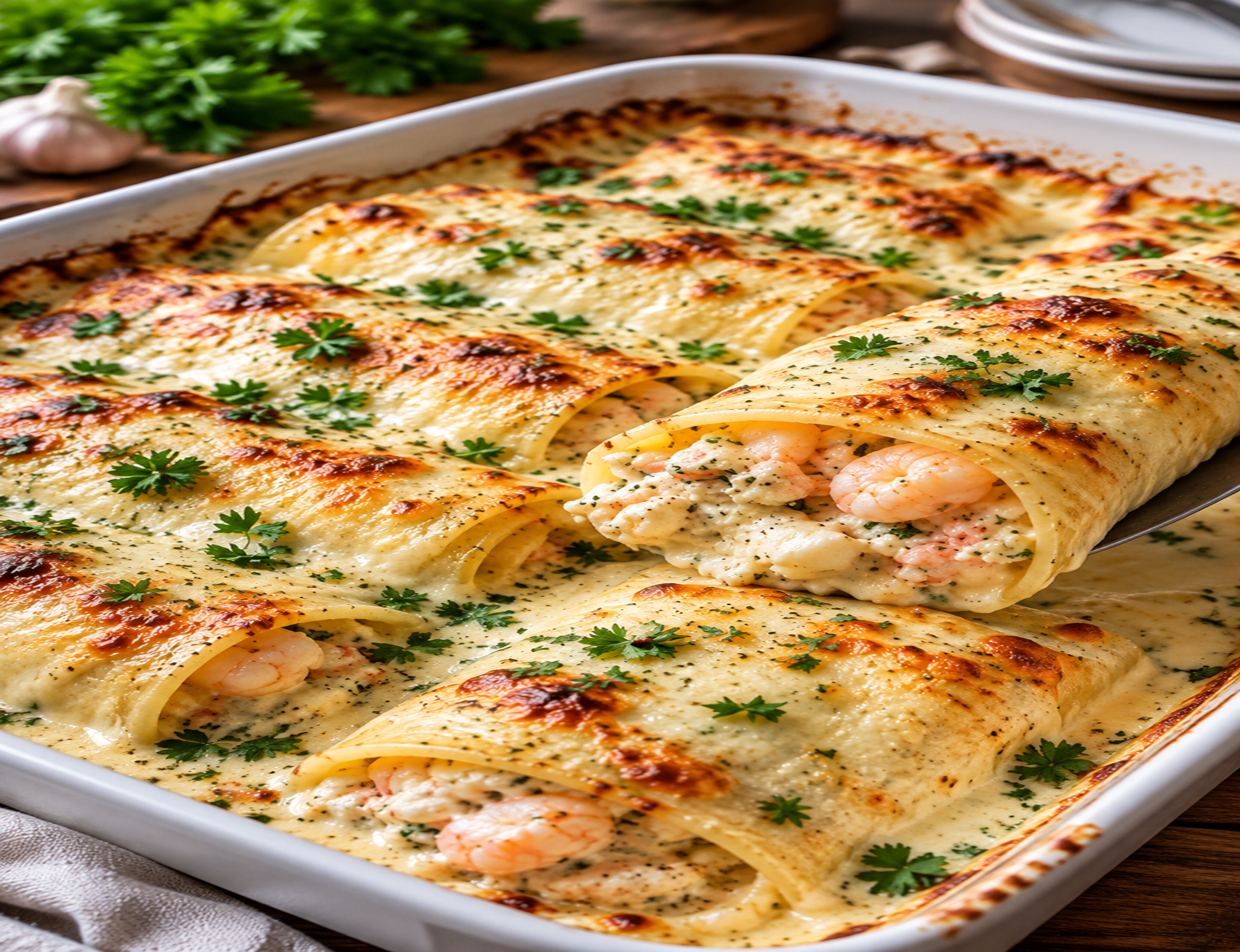
Creamy Shrimp Cannelloni Bake with Golden Cheese
There is something especially satisfying about pulling a bubbling pasta bake from the oven and seeing golden cheese around the edges. This creamy shrimp cannelloni takes that comfort-food feeling a step further with tender pasta rolls filled with juicy shrimp, creamy ricotta, Parmesan, garlic, and fresh herbs.
The sauce is deliberately generous. Cannelloni can become dry when there is not enough moisture around the pasta, so the creamy sauce does double duty: it adds richness while keeping the pasta tender as it finishes baking. A final few minutes under the broiler gives the top those irregular toasted spots that make a baked pasta dish so inviting.
This is a restaurant-inspired dinner that still works in an ordinary home kitchen. You do not need elaborate seafood stock or specialized pasta equipment. The key is simply to avoid overcooking the shrimp and to give the assembled casserole enough sauce before it goes into the oven.
Why This Shrimp Cannelloni Works
The filling combines several textures rather than relying on shrimp alone. Ricotta creates a soft, creamy base, Parmesan contributes saltiness and nuttiness, while chopped shrimp provide small bites of seafood throughout the filling. Garlic and parsley keep the richness from feeling flat, and a little lemon brightens the entire dish.
The other important detail is moisture. Pasta continues absorbing liquid while it bakes. Starting with a creamy sauce underneath and over the cannelloni gives the pasta enough moisture to become tender without turning the finished casserole into a watery dish.
Ingredients You’ll Need
For the shrimp filling
- 1 pound large shrimp, peeled, deveined, and finely chopped
- 15 ounces whole-milk ricotta cheese
- 1 cup freshly grated Parmesan cheese, divided
- 2 cloves garlic, finely minced
- 2 tablespoons fresh parsley, chopped
- 1 tablespoon fresh lemon juice
- 1 large egg
- 1/2 teaspoon kosher salt
- 1/2 teaspoon freshly ground black pepper
- 1/4 teaspoon Italian seasoning
For the creamy sauce
- 4 tablespoons unsalted butter
- 3 tablespoons all-purpose flour
- 2 1/2 cups whole milk, warmed
- 1/2 cup heavy cream
- 1/2 cup shredded mozzarella
- 1/4 cup Parmesan cheese
- 1 small garlic clove, grated
- 1/4 teaspoon ground nutmeg
- 1/2 teaspoon kosher salt
- 1/4 teaspoon black pepper
For assembly
- 12 cannelloni tubes or approximately 12 cooked lasagna sheets suitable for rolling
- 1/2 cup shredded mozzarella for the top
- 2 tablespoons chopped fresh parsley
- Nonstick spray or a little butter for the baking dish
A Few Ingredient Choices That Matter
Use raw shrimp rather than precooked shrimp. Raw shrimp can cook gently inside the filling while the casserole bakes. Precooked shrimp have already gone through one cooking cycle and can become rubbery after another 25 minutes in the oven.
Whole-milk ricotta gives the filling better body. Lower-fat ricotta can work, but its texture is generally less creamy. If your ricotta looks particularly wet, drain it briefly before mixing the filling.
Freshly grated Parmesan melts more naturally. It also gives the sauce a more pronounced savory flavor. A combination of mozzarella and Parmesan works well on top because mozzarella provides melt while Parmesan contributes browning and flavor.
How to Make Creamy Shrimp Cannelloni
1. Prepare the filling
Pat the shrimp dry with paper towels. This small step matters because excess surface moisture can loosen the filling.
Finely chop the shrimp and combine it with ricotta, 3/4 cup Parmesan, garlic, parsley, lemon juice, egg, salt, pepper, and Italian seasoning. Stir just until combined. Do not aggressively mash the shrimp; small pieces create a better texture in the finished cannelloni.
2. Make the creamy sauce
Melt the butter in a saucepan over medium heat. Add the flour and whisk constantly for about 1 to 2 minutes. The mixture should look smooth and slightly foamy but should not become deeply browned.
Slowly whisk in the warm milk. Adding it gradually helps prevent lumps. Once the mixture begins to thicken, stir in the heavy cream, garlic, nutmeg, salt, and pepper.
Reduce the heat and simmer gently for about 3 to 5 minutes. Remove from the heat and stir in the mozzarella and Parmesan until melted.
The finished sauce should coat the back of a spoon while remaining pourable. If it becomes extremely thick, add a small splash of milk.
3. Prepare the pasta
If using dried cannelloni tubes, follow the package instructions for whether they need pre-cooking. If using lasagna sheets for rolled cannelloni, cook them just until flexible and slightly under al dente. Drain and lay them flat on a lightly oiled surface so they do not stick together.
4. Fill the cannelloni
For pasta tubes, a piping bag or sturdy food-storage bag with one corner snipped off makes filling much easier. Spoon the shrimp mixture into the bag and pipe it into each tube.
If using lasagna sheets, place a line of filling near one end and roll the pasta firmly but not tightly. Overpacking can cause the filling to squeeze out during baking.
5. Assemble the casserole
Heat the oven to 375°F. Lightly grease a 9-by-13-inch baking dish.
Spread about 1 cup of creamy sauce over the bottom. Arrange the filled cannelloni in a single layer with the seams facing down when using rolled sheets.
Pour the remaining sauce over the pasta, making sure most of the exposed pasta is coated. Sprinkle the remaining mozzarella and a little Parmesan over the top.
6. Bake until bubbling
Cover the dish loosely with aluminum foil and bake for approximately 25 to 30 minutes. The sauce should be bubbling around the edges and the center should be hot.
Remove the foil and bake for another 5 to 8 minutes. For deeper golden spots, switch to the broiler for approximately 1 to 3 minutes, watching carefully because cheese can move from browned to burned surprisingly quickly.
Let the casserole rest for about 5 to 10 minutes before serving. This gives the creamy filling a chance to settle and makes the pasta easier to lift without falling apart.
The Biggest Mistakes to Avoid
Don’t overcook the shrimp before baking
The shrimp should be raw when incorporated into the filling. They cook during the bake. Cooking them first significantly increases the chance of a firm, rubbery texture.
Don’t skimp on the sauce
Any pasta exposed without enough sauce can dry out during baking. Make sure the bottom of the dish has a generous layer and the tops of the cannelloni are covered before adding cheese.
Don’t make the sauce too thick
A sauce that seems perfectly thick in the saucepan can become much thicker after baking. Keep it pourable so it can move around the pasta as the casserole cooks.
Don’t broil unattended
Broiling is useful for creating those appealing toasted patches, but it happens quickly. Stay beside the oven and remove the dish once the cheese reaches the level of browning you want.
Fresh Shrimp vs. Frozen Shrimp
For this recipe, frozen shrimp are completely practical. The important consideration is how they are thawed. Thaw them in the refrigerator, then drain and pat them thoroughly dry before chopping.
Fresh shrimp can be excellent when available, but freshness does not automatically make a better baked pasta. Properly thawed shrimp with excess moisture removed can produce an excellent filling and are often convenient for keeping this recipe available as a weeknight option.
Make-Ahead and Storage
The casserole can be assembled several hours ahead and refrigerated before baking. Keep it tightly covered while refrigerated. Because the dish starts cold, it may require additional baking time to become fully hot in the center.
For leftovers, refrigerate within two hours of cooking in a covered container. Use refrigerated leftovers within 3 to 4 days and reheat until the center reaches 165°F.
For the best texture, reheat individual portions covered in the oven or microwave rather than repeatedly reheating the entire casserole. The creamy sauce helps protect the pasta from drying, but repeated high-heat reheating can make the shrimp firmer.
What to Serve With Shrimp Cannelloni
This is a rich main course, so simple sides work particularly well. A crisp green salad with lemon vinaigrette provides acidity and freshness. Roasted asparagus, steamed broccoli, or lightly dressed arugula can also balance the creamy pasta.
For a more substantial dinner, serve the cannelloni with warm garlic bread. Keep the bread relatively simple—the casserole already provides plenty of cheese, cream, and seafood flavor.
Recipe Card
Creamy Shrimp Cannelloni Bake
- Prep Time: 30 minutes
- Cook Time: 35 minutes
- Total Time: 1 hour 5 minutes
- Servings: 6
- Difficulty: Moderate
- Cuisine: Italian-inspired
- Course: Dinner
- Calories: Approximately 620 calories per serving, depending on ingredients and portion size
Instructions: Prepare the shrimp-ricotta filling. Make the creamy Parmesan sauce. Cook pasta as needed for the type being used. Fill the cannelloni, spread sauce underneath and over the pasta, top with mozzarella and Parmesan, then bake at 375°F for 25 to 30 minutes covered. Uncover, brown for several minutes, and optionally broil briefly for a deeper golden finish. Rest 5 to 10 minutes before serving.
Food safety note: Because this recipe contains raw seafood and dairy, keep the filling refrigerated until assembly and avoid leaving the prepared casserole at room temperature for extended periods. Cook the seafood thoroughly and use a food thermometer when checking the center if you are uncertain about doneness.
Frequently Asked Questions
Can I use frozen shrimp?
Yes. Thaw them completely in the refrigerator, drain well, and pat them dry before chopping. Removing excess water helps keep the filling creamy rather than loose.
Can I use cooked shrimp?
You can, but raw shrimp are preferable for this preparation because they cook gently inside the filling. If cooked shrimp are used, chop them and avoid overbaking the casserole.
Can I make cannelloni without cannelloni tubes?
Yes. Lasagna sheets can be cooked until flexible, filled, and rolled into individual pasta bundles. This is also a useful option when cannelloni tubes are difficult to find.
Why is my creamy sauce too thick?
It may have been cooked too long or reduced too far. Whisk in a small amount of warm milk until it becomes smooth and pourable before assembling the casserole.
Why did my shrimp become rubbery?
The most common reason is overcooking. Shrimp cook quickly, and they continue cooking from residual heat after the casserole comes out of the oven. Avoid precooking them and watch the final baking and broiling stages.
Can I assemble this seafood pasta ahead of time?
Yes. Assemble the casserole, cover it, and refrigerate it until you are ready to bake. Allow additional baking time if it goes directly from the refrigerator into the oven.
Can I freeze shrimp cannelloni?
The dish can be frozen, although the creamy sauce may change slightly in texture after thawing. For best results, freeze it well covered and thaw it in the refrigerator before reheating.
What cheese works best on top?
Mozzarella gives the casserole a soft, melted topping, while Parmesan adds stronger savory flavor and browning. Using both creates a more interesting finish than relying on either one alone.
How do I prevent the pasta from drying out?
Keep the pasta well covered with sauce before baking and avoid extending the uncovered baking time. The sauce should remain visibly present around the pasta throughout the bake.
More Recipe Ideas for a Seafood Dinner
If you want to build a seafood-focused dinner rotation around this dish, consider developing related recipes such as creamy garlic shrimp pasta, shrimp Alfredo baked pasta, garlic Parmesan seafood lasagna, and lemon herb shrimp pasta. These dishes use overlapping ingredients while creating noticeably different textures and flavors.
For Pinterest, this casserole also lends itself naturally to search phrases around creamy pasta, shrimp dinner ideas, baked pasta recipes, Italian-inspired dinners, and easy seafood recipes. The golden cheese, visible shrimp filling, and bubbling cream sauce provide strong visual cues without needing exaggerated styling.