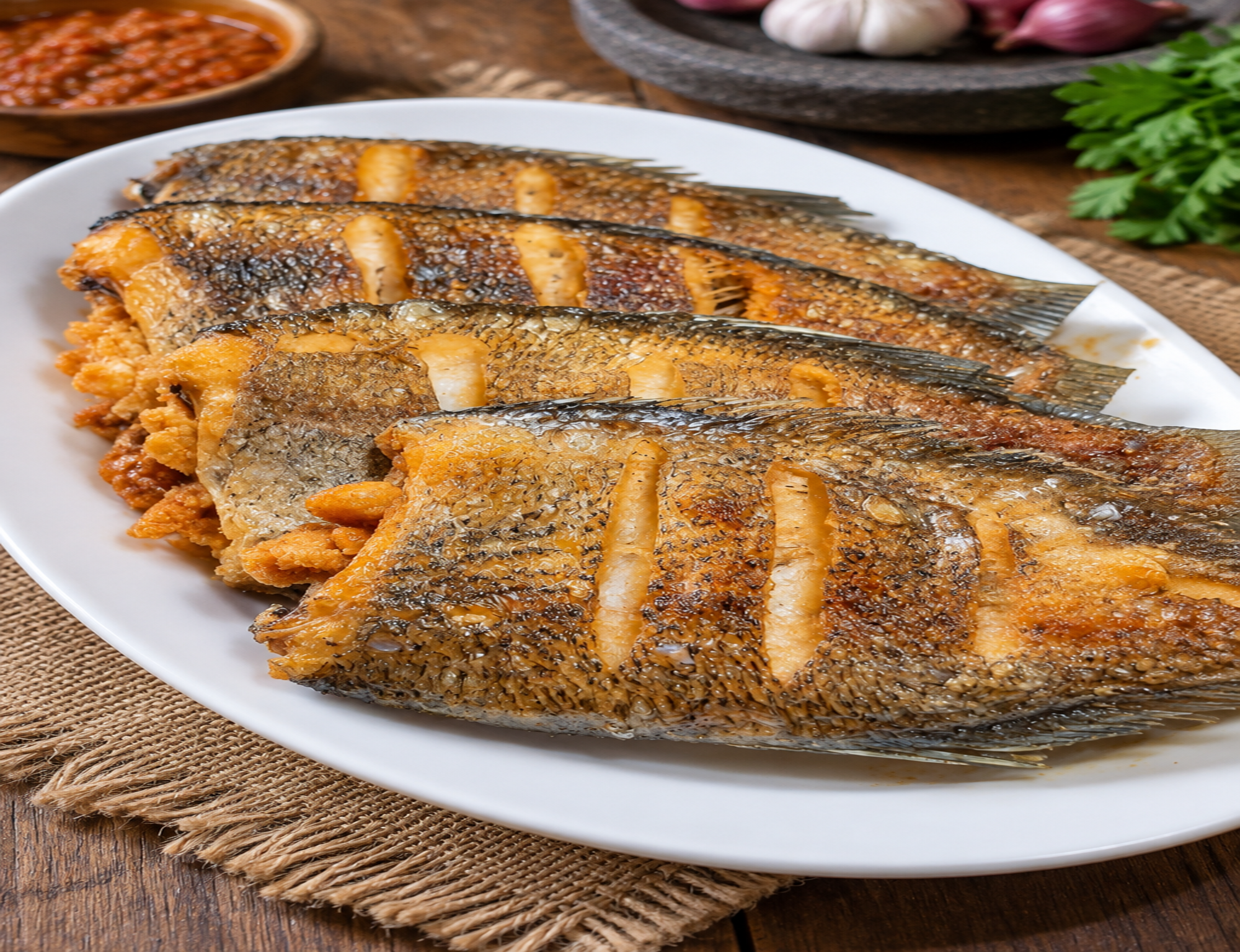
Crispy Fried Fish Recipe for a Golden Crunch
There is something especially satisfying about a plate of freshly fried fish when the skin is deeply golden, the edges are crisp, and the inside stays tender and flaky. The best version does not need a complicated coating or a long list of seasonings. What matters most is controlling moisture, using properly heated oil, and giving the fish enough room to brown instead of steam.
This crispy fried fish recipe takes that straightforward approach. The fish is seasoned simply, scored so the heat can reach the thicker portions more evenly, and fried until the exterior develops a crunchy, richly browned surface. Serve it with steamed rice, roasted vegetables, a fresh salad, or a spoonful of spicy chili sauce for an easy dinner that feels far more special than the effort suggests.
The technique is flexible enough for several firm fish varieties. The important thing is choosing pieces of similar thickness so they finish cooking at roughly the same time. For the most reliable result, dry the fish thoroughly before it touches the hot oil.
Why the Fish Gets So Crisp
Crisp fried fish starts with a dry surface. Water on the skin has to evaporate before the fish can brown properly, so excess moisture can cause splattering and slow down browning. Pat the fish thoroughly with paper towels before seasoning.
Scoring the skin also helps. Shallow cuts allow seasoning to reach more of the surface and help thicker portions cook more evenly. Keep the cuts controlled rather than slicing all the way through the fish.
The other major factor is oil temperature. If the oil is too cool, the fish can absorb more oil and develop a soft exterior. If it is excessively hot, the outside can become dark before the center is cooked. A steady medium-high frying temperature gives the skin enough time to become crisp while the flesh cooks through.
Ingredients
- 4 firm fish fillets or small whole fish, about 5 to 6 ounces each
- 1 teaspoon kosher salt
- 1/2 teaspoon black pepper
- 1/2 teaspoon garlic powder
- 1/2 teaspoon paprika
- 1/2 cup all-purpose flour
- 1 tablespoon cornstarch
- 1/2 teaspoon onion powder
- 1/2 cup neutral high-heat cooking oil, plus more if needed for shallow frying
- 1 lemon, cut into wedges
- Fresh herbs, for serving
- Chili sauce or sambal, optional
Choosing the Fish
Firm fish with relatively sturdy flesh works especially well for frying. Tilapia, catfish, snapper, perch, and similar varieties can all work depending on what is available. Fresh fish should have a clean, mild smell and firm flesh.
Skin-on pieces are particularly appealing for this style because the skin becomes deeply browned and crisp. If using skinless fillets, the flour-and-cornstarch coating becomes more important because there is no skin to provide that crunchy layer.
How to Make Crispy Fried Fish
1. Dry and season the fish
Pat the fish completely dry with paper towels. Inspect for any remaining scales or loose bones and remove them as needed.
Make several shallow diagonal cuts across the thickest part of each piece. Season both sides with salt, black pepper, garlic powder, and paprika. Let the seasoned fish rest for about 10 minutes while you prepare the coating.
2. Make a light coating
Combine the flour, cornstarch, and onion powder in a shallow bowl. The small amount of cornstarch is useful here because it helps create a lighter, more brittle crust than flour alone.
Dust the fish lightly. Shake off excess flour rather than leaving a thick layer. A heavy coating can become dense and may overpower the natural flavor of the fish.
3. Heat the oil
Add enough neutral cooking oil to a heavy skillet to create a shallow layer. Heat over medium-high heat until the oil is hot but not smoking.
A kitchen thermometer is helpful because oil temperature can change quickly once the fish is added. Aim for approximately 350°F before frying.
4. Fry without crowding the pan
Carefully place the fish into the hot oil, skin-side down when using skin-on pieces. Leave space between pieces so the oil can circulate around them.
Fry for approximately 3 to 5 minutes on the first side, depending on thickness. Avoid constantly moving the fish. Once the underside is deeply golden and releases naturally from the pan, turn it carefully.
Continue frying the second side until browned and the thickest portion is cooked through. The exact cooking time will depend on the size and type of fish.
5. Drain and rest briefly
Transfer the cooked fish to a wire rack set over a tray or to a plate lined with paper towels. A wire rack is preferable because it allows steam to escape from underneath instead of softening the bottom crust.
Give the fish a minute or two to settle before serving. Finish with lemon wedges and fresh herbs.
The Most Important Crispy-Fish Troubleshooting Tips
Why is my fried fish soggy?
Usually, excess moisture or insufficiently hot oil is responsible. Make sure the fish is thoroughly dried before coating it, and avoid overcrowding the pan. Adding too many cold pieces at once can cause the oil temperature to drop sharply.
Why did the coating fall off?
A wet surface makes it difficult for flour to adhere. Dry the fish first, apply only a thin coating, and avoid turning the pieces repeatedly while frying. Once the crust has formed, it will become much easier to handle.
Why is the outside dark but the inside not finished?
The oil may be too hot, or the fish pieces may be unusually thick. Lower the heat slightly and give thicker pieces more time. A thermometer provides a more dependable doneness check than color alone.
Cast Iron or Stainless Steel for Fried Fish?
Both can work well, but they behave differently. Cast iron holds heat very effectively, which can help maintain a steady frying temperature when food is added. Stainless steel responds more quickly to changes in heat and can be convenient when you want tighter control.
Whichever pan you use, the important point is maintaining enough oil temperature after the fish enters the skillet. A crowded pan can defeat the advantages of even the best cookware.
How to Know When Fish Is Done
Fish should be opaque and separate easily into flakes when properly cooked. For a more precise check, use an instant-read thermometer in the thickest portion. The USDA recommends cooking fish to an internal temperature of 145°F.
Because fish continues to cook slightly after leaving the pan, remove it promptly once it has reached a safe temperature rather than leaving it in hot oil longer than necessary.
What to Serve with Crispy Fried Fish
The crunchy fish works especially well with contrasting sides. Steamed white rice keeps the meal simple, while roasted potatoes or a crisp green salad make it feel more like a classic American seafood dinner.
- Steamed jasmine or white rice
- Fresh cucumber and tomato salad
- Roasted potatoes
- Coleslaw
- Steamed green beans
- Lemon wedges
- Spicy chili sauce or sambal
A bright acidic accompaniment is particularly useful because lemon or chili sauce cuts through the richness of the fried exterior.
Storage and Reheating
Fried fish is best immediately after cooking, when the crust is at its crispest. If you have leftovers, cool them promptly and refrigerate them in a covered container within two hours.
For the best reheating texture, use an oven or air fryer rather than a microwave. Reheat at approximately 375°F until the fish is hot throughout and the exterior has regained some crispness. Avoid sealing very hot fish in a container because trapped steam can soften the crust.
Easy Variations
Spicy fried fish
Add cayenne pepper or your favorite chili powder to the flour mixture. Serve with a cooling yogurt-based sauce or fresh slaw.
Lemon-herb fish
Increase the black pepper and add dried parsley or oregano to the coating. Finish with fresh lemon juice immediately before serving.
Extra-crunchy coating
For a more pronounced crust, slightly increase the cornstarch while keeping the coating thin. The goal is a delicate crunchy shell rather than a thick batter.
Recipe Card
| Prep Time | 15 minutes |
|---|---|
| Cook Time | 15 minutes |
| Total Time | 30 minutes |
| Servings | 4 |
| Difficulty | Easy |
| Cuisine | American-inspired |
| Course | Dinner |
| Calories | Approximately 360 calories per serving, depending on fish and oil absorption |
Frequently Asked Questions
Can I use frozen fish?
Yes. Thaw it completely in the refrigerator first, then pat it very dry before seasoning and coating.
What oil is best for frying fish?
Neutral oils with relatively high smoke points work well, including canola, vegetable, peanut, or sunflower oil. Choose according to your preference and dietary needs.
Can I fry fish without flour?
Yes. Skin-on fish can be fried without a flour coating, provided the surface is dry and the oil is properly heated. The result will be more focused on crisped fish skin rather than a flour crust.
Should I fry fish skin-side down first?
For skin-on fish, starting skin-side down is generally useful because the skin benefits from direct contact with the hot pan and has time to become crisp.
How do I keep fried fish crispy?
Do not cover freshly fried fish tightly. Place it on a wire rack so air can circulate underneath and steam does not collect against the crust.
Can I make the fish ahead of time?
You can prepare and season the fish ahead of time, but frying is best done close to serving. The crust naturally loses some crispness as it sits.
Can I use an air fryer to reheat it?
Yes. An air fryer can restore some of the exterior crispness without adding much additional oil. Heat until the fish is hot throughout.
What is the safest way to check if fried fish is cooked?
Use an instant-read thermometer in the thickest section and cook the fish to 145°F. Visual cues such as opaque flesh and easy flaking are useful, but temperature is the more reliable safety check.
More Recipe Ideas for the Same Dinner Table
- Lemon Herb Fish with Roasted Vegetables
- Spicy Garlic Fish with Steamed Rice
- Crispy Fish Sandwiches with Fresh Slaw
- Pan-Seared Fish with Lemon Butter
This crispy fried fish is at its best when served hot, straight from the skillet, with plenty of lemon and something fresh or spicy on the side. The key is surprisingly simple: dry fish, properly heated oil, a light coating, and enough space in the pan for the crust to brown. Once those details are under control, homemade fried fish becomes an easy dinner rather than a fussy one.