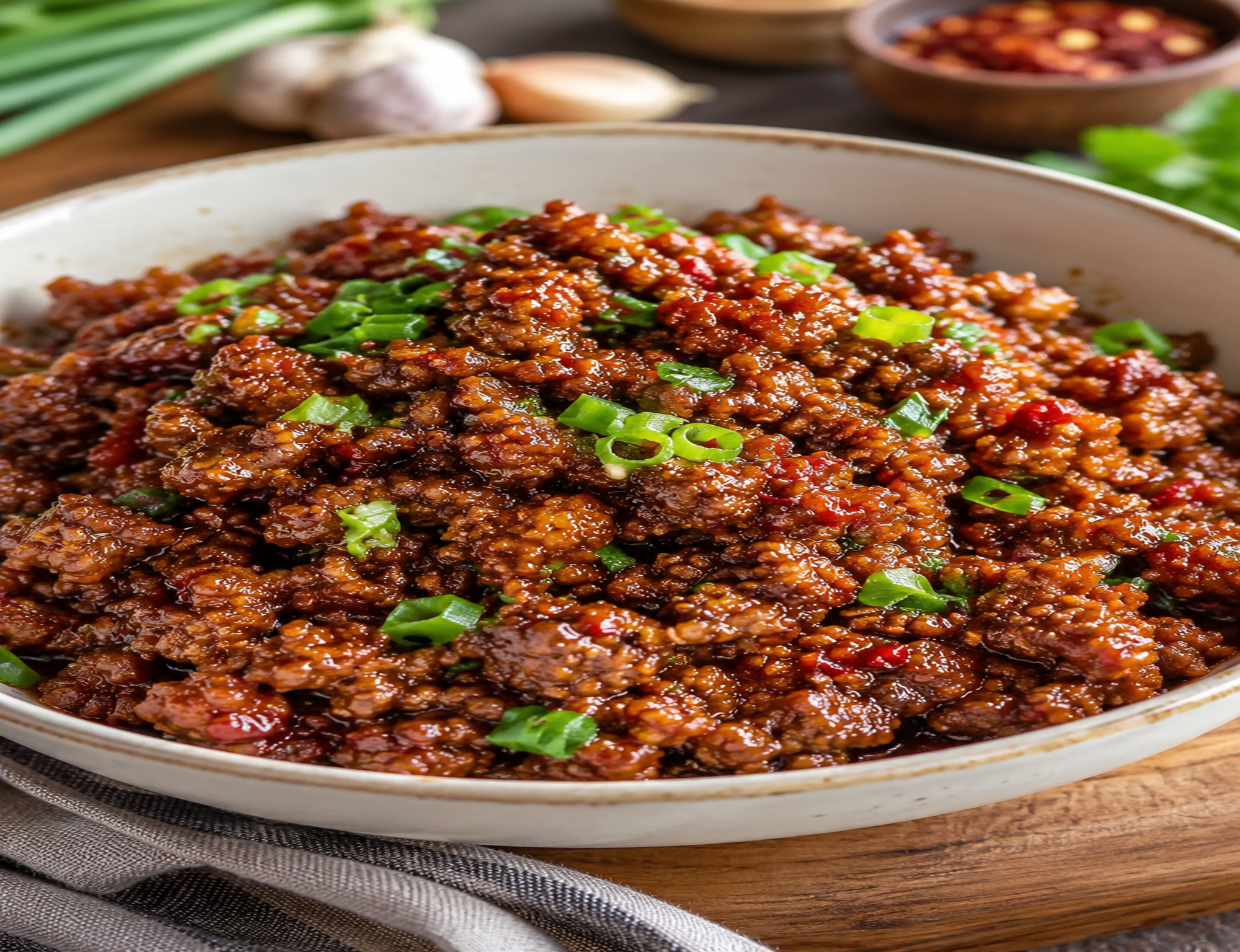
Easy Asian Ground Beef Stir Fry – Sticky, Savory & Ready in 20 Minutes
There are nights when dinner needs to happen quickly, but “quick” should not mean bland. This Asian ground beef stir fry is one of those recipes that delivers a surprisingly deep flavor from a short ingredient list and a very hot skillet.
The ground beef cooks into small, irregular browned pieces that catch the sauce in all the little edges and crevices. Garlic adds warmth, red chili brings a little heat, and green onions cut through the richness at the end. Spoon it over steamed rice and you have a complete weeknight dinner with very little cleanup.
Why This Ground Beef Stir Fry Works So Well
The trick is not complicated: brown the beef properly before adding the sauce. Ground beef contains moisture, so if the pan is crowded or the heat is too low, the meat can steam instead of developing those deeply browned bits.
Once the beef has good color, the sauce goes in. The heat reduces the liquid quickly, coating the meat rather than leaving it sitting in a watery pool. That short final reduction is what gives the finished dish its sticky texture.
Another small detail matters: add the green onions toward the end. Some go into the pan for flavor, while the freshest pieces are scattered over the finished beef for a crisp, fresh contrast.
Ingredients You’ll Need
For the beef
- 1 pound lean ground beef, preferably 85% to 90% lean
- 1 tablespoon neutral cooking oil
- 3 cloves garlic, finely minced
- 1 teaspoon freshly grated ginger
- 1 small red chili, finely chopped, or 1/2 teaspoon red pepper flakes
- 3 green onions, sliced
For the sticky sauce
- 1/4 cup low-sodium soy sauce
- 1 tablespoon brown sugar
- 1 tablespoon rice vinegar
- 1 tablespoon hoisin sauce
- 1 teaspoon toasted sesame oil
- 1/4 cup water
- 1 teaspoon cornstarch
For serving
- Cooked white or brown rice
- Extra sliced green onions
- Optional sesame seeds
- Optional thinly sliced red chili
The Best Pan for This Recipe
A large skillet or wok works well, but the most important characteristic is surface area. The beef should have enough room to spread into a relatively thin layer. A crowded pan traps steam and makes browning more difficult.
Cast iron can produce excellent browning because it holds heat well, while stainless steel responds quickly when you adjust the burner. Either works. For a fast weeknight recipe, use the pan you already know how to control rather than buying specialized cookware.
How to Make Asian Ground Beef Stir Fry
- Mix the sauce. In a small bowl, whisk together the soy sauce, brown sugar, rice vinegar, hoisin sauce, sesame oil, water, and cornstarch. Make sure the cornstarch is fully dispersed before it goes into the skillet.
- Heat the skillet. Place a large skillet over medium-high to high heat. Add the cooking oil and let it heat until it moves easily across the surface.
- Brown the beef. Add the ground beef and break it apart with a wooden spoon or spatula. Let it cook undisturbed for short periods between stirring so the meat can develop browned edges. Cook for about 5 to 7 minutes, until thoroughly browned.
- Drain excess fat if necessary. Depending on the beef you use, there may be more rendered fat than you want. Carefully remove some, leaving enough in the pan to carry the flavors.
- Add the aromatics. Stir in the garlic, ginger, and red chili. Cook for about 30 to 60 seconds, just until fragrant. Garlic can burn quickly at this heat, so keep it moving.
- Add the sauce. Give the sauce another quick stir, then pour it around the beef. Toss everything together and let it bubble for 2 to 3 minutes.
- Reduce until glossy. Keep cooking until the sauce thickens enough to cling to the beef. You are looking for a shiny coating rather than a thin liquid sauce.
- Finish with green onions. Stir in half of the green onions, then remove the skillet from the heat. Scatter the remaining green onions over the top.
Three Small Details That Make a Big Difference
1. Give the beef time to brown
Constant stirring prevents the meat from spending enough time against the hot cooking surface. Stir to break it apart, but then allow it to sit for a moment. Those browned bits are a major source of flavor.
2. Keep the sauce balanced
Soy sauce provides salt and savory depth, brown sugar adds sweetness, rice vinegar brings acidity, and hoisin contributes a thicker, more rounded flavor. If your finished beef tastes heavy, a tiny extra splash of rice vinegar can brighten it.
3. Don’t over-reduce the sauce
The sauce will continue thickening slightly as it cools. If it becomes extremely sticky while still in the pan, add a tablespoon of water and toss. The ideal texture is glossy and clingy, not dry or candy-like.
Common Problems and Easy Fixes
Why is my ground beef watery?
The skillet may not have been hot enough, or too much beef may have been added at once. A crowded pan releases moisture faster than it can evaporate. Use a wide skillet and cook in batches if necessary.
Why didn’t the sauce become sticky?
Make sure the cornstarch was mixed evenly into the sauce and allow the sauce to simmer briefly after adding it. Cornstarch needs heat to thicken. If the pan is very dry, add a small splash of water and continue cooking.
Why does the garlic taste bitter?
Garlic burns quickly over high heat. Add it only after the beef has browned and cook it briefly before adding the sauce. Dark brown or black garlic usually indicates that it has gone too far.
Easy Variations
Make it spicy: Add extra fresh chili, crushed red pepper, or a small spoonful of chili-garlic sauce.
Add vegetables: Thinly sliced bell peppers, broccoli, shredded carrots, mushrooms, or snap peas can be added after browning the beef. Give firm vegetables a few minutes to soften before returning the beef to the pan.
Make it milder: Leave out the fresh chili and red pepper flakes. The savory sauce still has plenty of flavor without the heat.
Serve it differently: Rice is the easiest pairing, but the beef can also be spooned into lettuce cups, served over noodles, or used as a filling for a quick rice bowl.
What to Serve With It
Steamed jasmine rice is the classic choice because its mild flavor gives the sticky beef room to stand out. Brown rice works when you want a nuttier, chewier base.
For a lighter plate, serve the beef with steamed broccoli, cucumber slices, or a simple cabbage slaw. The cool, crisp vegetables are especially good against the warm, savory glaze.
Meal Prep, Storage, and Reheating
Once cooked, refrigerate leftover beef in a shallow airtight container within 2 hours. Properly refrigerated leftovers are best used within 3 to 4 days.
For meal prep, divide the beef and rice into individual containers after cooling slightly. Keep fresh green onions or other crunchy toppings separate and add them after reheating.
Reheat the beef until it is steaming hot throughout. A skillet with a tablespoon or two of water works particularly well because the added moisture loosens the sauce without making the beef soggy. Microwave reheating also works; use short intervals and stir between them.
Recipe Card
Prep Time: 10 minutes
Cook Time: 10 minutes
Total Time: 20 minutes
Servings: 4
Difficulty: Easy
Cuisine: Asian-inspired
Course: Dinner
Calories: Approximately 430 calories per serving, excluding rice; estimate will vary by beef fat percentage and exact ingredients.
Frequently Asked Questions
Can I use ground turkey instead of ground beef?
Yes. Ground turkey can replace the beef, although it has a milder flavor and usually benefits from keeping the garlic, ginger, chili, and sauce proportions generous.
Can I make this recipe without hoisin sauce?
Yes. You can omit it and slightly increase the brown sugar or add a small amount of oyster sauce if available. The flavor will be somewhat less sweet and rounded.
What kind of ground beef is best?
An 85% to 90% lean ground beef is a good balance. It provides enough fat for flavor and browning without leaving the finished dish excessively greasy.
Can I make the sauce ahead of time?
Absolutely. Mix the sauce several hours ahead and refrigerate it in a covered container. Stir it well immediately before adding it to the skillet because the cornstarch settles as it sits.
Can I freeze the cooked beef?
Yes. Cool the beef promptly, place it in an airtight freezer-safe container, and freeze for up to about 2 to 3 months for best quality. Thaw overnight in the refrigerator before reheating.
Is a wok necessary?
No. A wide skillet works very well. The goal is a hot cooking surface with enough room for the beef to brown rather than steam.
How can I make this less salty?
Use low-sodium soy sauce and avoid adding extra salt. Serving the beef with plain rice also balances the intensity of the sauce.
Can I add vegetables directly to the stir fry?
Yes. Add vegetables according to how long they need to cook. Broccoli and carrots need more time, while thinly sliced peppers, scallions, and leafy greens can be added later.
This is the kind of dinner that earns a regular spot in a weeknight rotation: fast enough for a busy evening, flavorful enough to feel like more than a basic ground beef meal, and flexible enough to adapt to whatever vegetables are waiting in the refrigerator.
The key is simple—brown the beef well, keep the aromatics from burning, and let the sauce reduce until it coats every little piece. Serve it over hot rice, finish with plenty of green onions, and dinner is ready.
Related Recipe Ideas
- Spicy Garlic Ground Beef Rice Bowls
- Sweet and Savory Asian Beef Lettuce Wraps
- Ginger Garlic Beef Noodle Stir Fry
- Easy Beef and Broccoli Skillet