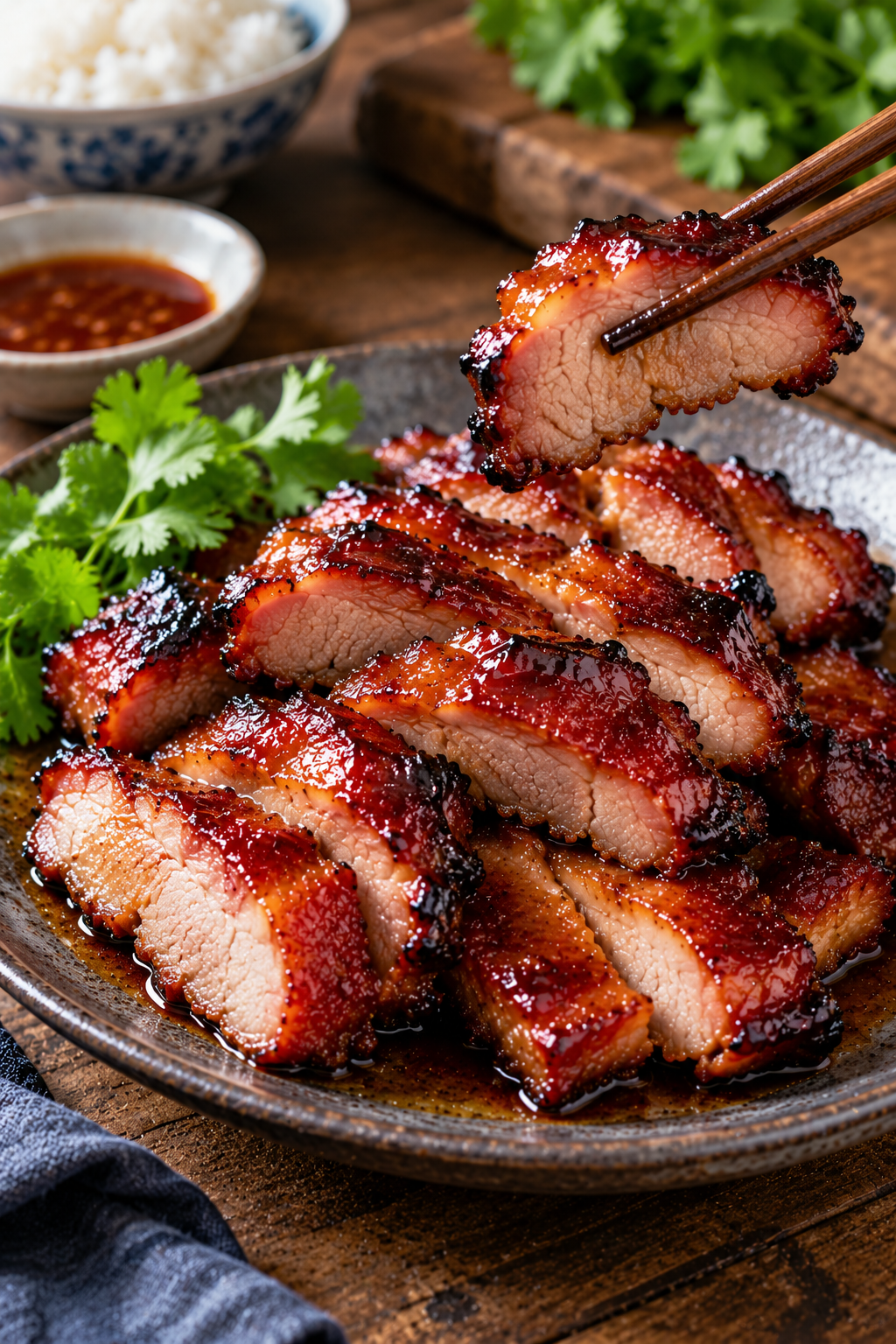
Easy Chinese BBQ Pork (Char Siu) Recipe – Sticky, Sweet & Juicy
This homemade Chinese BBQ pork recipe brings together tender roasted pork, a sweet and savory marinade, and a glossy glaze with lightly caramelized edges. Inspired by Cantonese-style char siu, this oven-roasted version is a practical way to enjoy classic Chinese barbecue flavors at home without a specialized roasting oven.
Serve the sliced pork over steamed rice, tuck it into noodle bowls, or add it to your favorite Asian-inspired dinner. The key is giving the pork enough time to absorb the marinade and glazing it during roasting so the outside develops a rich, flavorful finish.
What Is Chinese BBQ Pork (Char Siu)?
Char siu is a Cantonese-style roasted pork dish traditionally recognized by its reddish-brown exterior, sweet-savory flavor, and caramelized surface. Its marinade commonly includes ingredients such as soy sauce, sugar or honey, garlic, and Chinese five-spice powder. Some traditional recipes also use fermented red bean curd or red coloring to achieve a characteristic color.
This home-style version uses readily available ingredients and an ordinary oven. The result is inspired by the flavors of traditional char siu rather than a claim to reproduce every regional preparation method.
Why You’ll Love This Homemade Char Siu Recipe
- Rich, balanced flavor: Soy sauce, honey, garlic, and five-spice create a savory marinade with gentle sweetness and warm spice.
- A caramelized exterior: Brushing the pork with reserved marinade during cooking helps build a glossy, flavorful coating.
- Everyday kitchen equipment: You can prepare this version with a baking dish, a wire rack, and a standard oven.
- Flexible serving options: Pair the pork with rice, noodles, steamed vegetables, or a homemade rice bowl.
- Useful for meal preparation: Leftovers can be refrigerated and reheated for another meal.
Ingredients for Chinese BBQ Pork
The ingredients below make approximately four servings. Pork shoulder is a good option for a richer, more traditional barbecue-style texture, while pork tenderloin cooks faster and is leaner. This recipe uses boneless pork shoulder cut into long strips for more even roasting.
For the pork
- 2 pounds (900 g) boneless pork shoulder, trimmed and cut into long strips about 1 1/2 inches thick
For the char siu marinade
- 1/4 cup (60 ml) regular soy sauce
- 3 tablespoons honey
- 2 tablespoons hoisin sauce
- 2 tablespoons Shaoxing cooking wine or dry sherry
- 2 tablespoons brown sugar
- 3 garlic cloves, finely minced
- 1 teaspoon Chinese five-spice powder
- 1/2 teaspoon ground white or black pepper
- 1 teaspoon toasted sesame oil
- 1 teaspoon red fermented bean curd paste, optional
For the finishing glaze
- 1 tablespoon honey
- 1 tablespoon water
Important: Reserve the finishing glaze separately. Do not use marinade that has contacted raw pork as a finishing sauce unless it is thoroughly cooked first.
Ingredient Tips and Substitutions
Choose the right cut of pork
Boneless pork shoulder contains enough fat to help keep the meat moist during roasting. Cut it into similarly sized strips so the pieces cook at a more consistent rate. Pork tenderloin can also work, but because it is leaner, it may cook more quickly and become dry if left in the oven too long.
Soy sauce
Regular soy sauce supplies salt and savory depth. If you use reduced-sodium soy sauce, the finished flavor may be less salty. Avoid adding extra salt until you have tasted the cooked pork.
Hoisin sauce
Hoisin adds sweetness, savory depth, and a slightly thick consistency to the marinade. It is helpful for developing the characteristic sticky coating associated with Chinese BBQ pork.
Honey and brown sugar
These ingredients help create a glossy glaze and encourage browning. Because sugar can burn under intense heat, watch the pork closely during the final roasting stage.
Shaoxing wine
Shaoxing wine contributes depth to the marinade. Dry sherry is a practical substitute if Shaoxing wine is unavailable. The flavor will differ slightly, but the recipe can still work well.
Chinese five-spice powder
This aromatic blend often contains star anise, cinnamon, fennel seed, cloves, and Sichuan peppercorn. It gives the pork a recognizable warm, fragrant flavor. Use the measured amount rather than adding a large quantity, which can overpower the other ingredients.
How to Make Chinese BBQ Pork in the Oven
Step 1: Prepare the marinade
In a medium bowl, whisk together the soy sauce, honey, hoisin sauce, Shaoxing wine, brown sugar, garlic, five-spice powder, pepper, sesame oil, and optional fermented bean curd paste until evenly combined.
Set aside the separate honey-and-water glaze for later. Keep the raw-pork marinade away from ready-to-eat foods and clean any surfaces that come into contact with raw meat.
Step 2: Marinate the pork
Place the pork strips in a covered, nonreactive container or a food-safe resealable bag. Pour in the marinade and turn the pieces until coated on all sides.
Refrigerate for at least 4 hours, preferably overnight, turning the pork occasionally if practical. Keep the pork refrigerated throughout marinating rather than leaving it at room temperature.
Step 3: Prepare the oven and baking tray
Preheat the oven to 400°F (200°C). Line a rimmed baking sheet with foil for easier cleanup, then place an oven-safe wire rack over the tray. Lightly oil the rack if needed to reduce sticking.
Remove the pork from the marinade, allowing excess liquid to drip off. Arrange the strips on the rack with space between them. Discard the marinade that has contacted the raw pork, or cook it thoroughly before using it in another application.
Step 4: Roast the pork
Roast for approximately 25 to 40 minutes, depending on the thickness of the strips and the characteristics of your oven. Turn the pieces partway through cooking if necessary for more even browning.
Begin checking the internal temperature before the estimated cooking time ends. For whole cuts of pork, the USDA minimum safe internal temperature is 145°F (63°C), followed by a rest of at least 3 minutes. For this shoulder-based recipe, continue cooking as desired for tenderness, but do not rely on appearance alone to determine food safety.
Step 5: Brush on the glaze
Mix the reserved tablespoon of honey with the tablespoon of water. During the final 5 to 10 minutes of roasting, brush a thin layer over the pork and return it to the oven.
Watch carefully as the glaze begins to darken. Honey and sugar can burn quickly, so use the broiler only briefly if additional caramelization is needed, keeping the pork under close supervision.
Step 6: Rest and slice
Transfer the cooked pork to a clean cutting board and let it rest for at least 3 minutes. Slice across the grain into bite-sized pieces or thin serving slices.
Arrange the pork on a serving platter and spoon over any clean cooking juices that are suitable for serving. Add fresh cilantro or sliced scallions if desired. Serve warm with rice or noodles.
Tips for Juicy Pork and a Sticky Glaze
- Cut evenly: Similar-sized strips help prevent thin pieces from drying out before thicker pieces finish cooking.
- Allow enough marinating time: Several hours in the refrigerator gives the seasoning time to flavor the meat.
- Use a rack: Elevating the pork allows hot air to circulate and helps the surface roast instead of sitting in liquid.
- Apply the finishing glaze near the end: This reduces the risk of burning the honey and sugar.
- Use a meat thermometer: Check the thickest section rather than judging doneness by the outside color.
- Slice across the grain: Cutting across the muscle fibers can make each piece easier to chew.
Common Mistakes to Avoid
Skipping the marinade
Cooking the pork immediately after adding the marinade can produce a less developed flavor. If time is limited, marinate it for as long as practical under refrigeration.
Overcrowding the baking tray
When the pork pieces are packed too closely, moisture can accumulate around them and interfere with browning. Use a sufficiently large tray or cook in batches.
Applying too much glaze too early
A thick coating of honey and sugar can darken or burn before the pork is fully cooked. Apply the finishing glaze toward the end and monitor the surface closely.
Cutting the pork immediately
A short resting period allows the meat to settle before slicing. Use a clean cutting board and utensils for the cooked pork.
What to Serve with Chinese BBQ Pork
The sweet-savory flavor of char siu pairs well with simple sides that balance its richness.
- Steamed white rice: A simple base that absorbs the flavorful juices.
- Garlic fried rice: A savory side for a more substantial meal.
- Stir-fried vegetables: Bok choy, broccoli, green beans, or cabbage add freshness and texture.
- Asian-style noodles: Serve sliced pork over noodles with vegetables and a complementary sauce.
- Rice bowls: Combine pork, rice, cucumber, scallions, and vegetables for an easy lunch or dinner.
Recipe Variations
Spicy Chinese BBQ pork
Add a small amount of chili garlic sauce or red pepper flakes to the marinade. Adjust the heat gradually so it complements the sweet and savory flavors.
Char siu with pork tenderloin
Replace the pork shoulder with pork tenderloin for a leaner version. Because tenderloin is smaller and leaner, check its temperature earlier and remove it when it reaches a safe internal temperature rather than following the shoulder cooking time automatically.
Grill-style char siu
You can adapt the method for a grill using indirect heat and a controlled finishing stage. Monitor the glaze carefully, as drippings and sugary marinades can cause flare-ups. Cooking times will vary by grill and meat thickness.
How to Store and Reheat Leftovers
Refrigerating
Place leftover pork in a clean, airtight container and refrigerate within 2 hours of cooking, or within 1 hour if the surrounding temperature exceeds 90°F (32°C). For best food safety, use refrigerated leftovers within 3 to 4 days.
Freezing
For longer storage, freeze the cooled pork in a freezer-safe container or bag. Remove excess air and label the container with the date. For best quality, use within 2 to 3 months.
Reheating
Reheat the pork in a covered oven-safe dish with a small splash of water or broth to help retain moisture. Heat leftovers to 165°F (74°C). You can also use a microwave-safe container, covering the pork and stirring or rearranging pieces as needed for even heating.
Frequently Asked Questions
Is char siu the same as Chinese BBQ pork?
Char siu is a well-known Cantonese style of Chinese BBQ pork. It is typically marinated and roasted until the exterior develops a distinctive reddish-brown, caramelized finish.
Can I make Chinese BBQ pork without red food coloring?
Yes. This recipe does not require artificial red coloring. The soy sauce, hoisin, honey, and brown sugar help create a naturally deep brown glaze, although the color will differ from some restaurant-style versions.
Can I marinate the pork overnight?
Yes. Overnight refrigeration is convenient and allows the flavors to develop. Keep the pork covered in the refrigerator and cook it within a suitable food-safe timeframe.
Why is my char siu glaze burning?
The honey and brown sugar can burn when exposed to excessive heat for too long. Apply the finishing glaze late in the cooking process, monitor the pork closely, and avoid leaving it unattended under the broiler.
Can I use pork tenderloin instead of pork shoulder?
Yes. Tenderloin is leaner and cooks faster, so adjust the cooking time and monitor its internal temperature. The finished texture will be different from the richer, fattier pork shoulder version.
What temperature should pork reach to be safe?
The USDA recommends at least 145°F (63°C) for whole cuts of pork, followed by a rest of at least 3 minutes. Ground pork has a different minimum safe temperature. Use a food thermometer to check the thickest part of the meat.
Easy Chinese BBQ Pork Recipe Card
Chinese BBQ Pork (Char Siu)
Oven-roasted pork shoulder coated in a sweet-savory marinade and finished with a sticky honey glaze.
Prep time: 15 minutes
Marinating time: 4 hours to overnight
Cook time: 25–40 minutes, approximately
Resting time: At least 3 minutes
Total active preparation and cooking time: Approximately 45–60 minutes, excluding marinating
Yield: 4 servings
Cooking method: Oven roasting
Ingredients
- 2 pounds (900 g) boneless pork shoulder, cut into long strips
- 1/4 cup (60 ml) soy sauce
- 3 tablespoons honey
- 2 tablespoons hoisin sauce
- 2 tablespoons Shaoxing cooking wine or dry sherry
- 2 tablespoons brown sugar
- 3 garlic cloves, minced
- 1 teaspoon Chinese five-spice powder
- 1/2 teaspoon ground white or black pepper
- 1 teaspoon toasted sesame oil
- 1 teaspoon red fermented bean curd paste, optional
- 1 tablespoon honey, for finishing glaze
- 1 tablespoon water, for finishing glaze
Instructions
- Whisk together the soy sauce, 3 tablespoons honey, hoisin sauce, wine, brown sugar, garlic, five-spice powder, pepper, sesame oil, and optional fermented bean curd paste.
- Coat the pork with the marinade, cover, and refrigerate for at least 4 hours or overnight.
- Preheat the oven to 400°F (200°C). Line a rimmed baking sheet and set an oven-safe wire rack on top.
- Arrange the pork strips on the rack, allowing space between pieces. Discard the used raw-pork marinade or cook it thoroughly before using it elsewhere.
- Roast for approximately 25–40 minutes, checking the internal temperature and adjusting the time for the thickness of the meat.
- Mix 1 tablespoon honey with 1 tablespoon water. Brush over the pork during the final 5–10 minutes, watching closely to prevent burning.
- Ensure the whole cuts reach at least 145°F (63°C), then rest for at least 3 minutes. Slice across the grain and serve.
Recipe Notes
- Pork shoulder produces a richer result; pork tenderloin is leaner and requires different cooking timing.
- Use a meat thermometer rather than color alone to assess doneness.
- Keep the pork refrigerated while marinating.
- Refrigerate leftovers promptly and reheat to 165°F (74°C).
Estimated nutrition per serving: Not calculated. Actual nutrition varies with the pork cut, trimming, marinade absorption, and serving size.
Make This Chinese BBQ Pork for Your Next Dinner
Homemade char siu is a flavorful way to bring Chinese BBQ-inspired cooking into your kitchen. With a balanced marinade, evenly sized pork strips, and a carefully applied finishing glaze, you can create tender slices with a rich, caramelized exterior.
Serve it with rice, noodles, or vegetables, and save any leftovers for a convenient meal later in the week. If you make this recipe, adjust the seasoning to your taste and keep a close eye on the glaze during the final minutes of roasting.