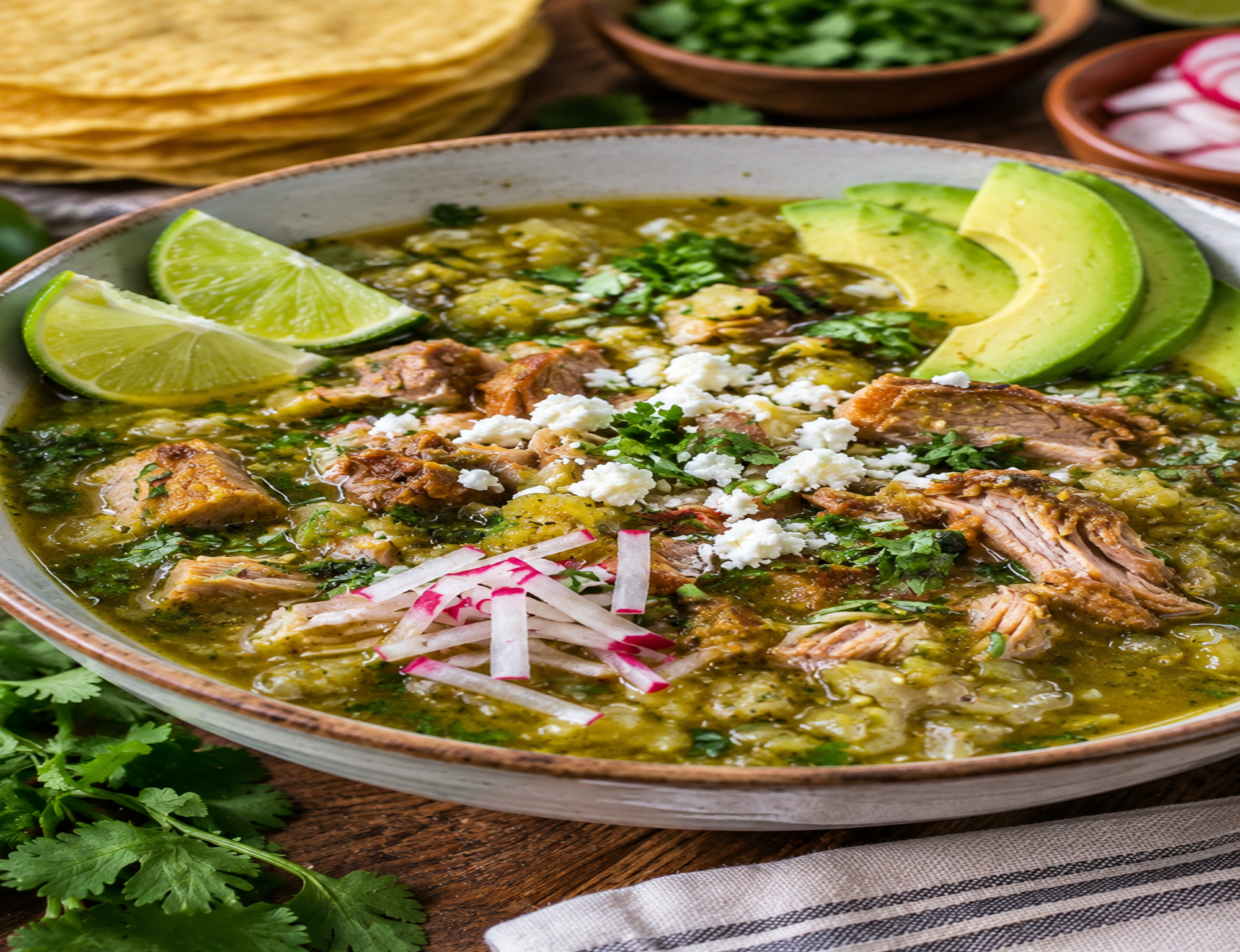
Easy Pozole Verde Recipe with Tender Pork
There is something especially satisfying about a bowl of pozole verde when the broth is rich, the pork is tender enough to pull apart with a fork, and every spoonful gets a little crunch from fresh radish and a bright squeeze of lime. This green version of pozole has a fresh, savory character from green chiles, tomatillos, herbs, and aromatics, while hominy gives the soup the hearty texture that makes it feel like a complete meal.
This version is designed for a home kitchen rather than a restaurant line. The goal is a flavorful pot of soup without complicated techniques or hard-to-find equipment. The pork simmers gently until tender, the green base develops deeper flavor as it cooks, and the toppings are added at the end so they retain their fresh contrast.
Why This Green Pozole Works
The best part of pozole verde is the contrast. The broth is savory and slightly tangy, the pork contributes richness, hominy adds chew, and the toppings bring freshness and texture. Instead of relying on one ingredient for all the flavor, the soup builds it in layers.
Gentle simmering is particularly important here. A hard boil can make the surface of the broth look greasy and can cause leaner pieces of pork to become tougher. Keeping the pot at a steady, low simmer gives the connective tissue time to soften while allowing the broth to develop a fuller flavor.
The toppings are not just decoration. Lime cuts through the richness of the pork, radishes provide crispness, avocado adds creaminess, cilantro contributes freshness, and queso fresco brings a mild salty finish.
What You’ll Need
- Pork shoulder: About 2 1/2 pounds, cut into large chunks. Pork shoulder works well because its marbling and connective tissue become tender during a long simmer.
- White hominy: Two 25-ounce cans, drained and rinsed. Hominy provides the characteristic chewy texture of pozole.
- Tomatillos: About 1 1/2 pounds, husked and rinsed.
- Poblano peppers: 2 medium peppers for a mild roasted chile flavor.
- Jalapeño: 1, or more if you prefer additional heat.
- White onion: 1 medium onion, divided between the broth and cooking pot.
- Garlic: 4 cloves.
- Cilantro: 1 large bunch, with some reserved for serving.
- Chicken broth: 6 cups, preferably low sodium so the seasoning can be controlled.
- Ground cumin: 1 teaspoon.
- Dried oregano: 1 teaspoon.
- Salt: Start with 1 1/2 teaspoons and adjust near the end.
- Black pepper: 1/2 teaspoon.
- Neutral cooking oil: 1 tablespoon.
The Fresh Toppings Make the Bowl
Set aside a few minutes to prepare the toppings while the pozole cooks. Thinly sliced radishes, lime wedges, chopped cilantro, avocado slices, and crumbled queso fresco give the finished soup its signature fresh-and-rich balance.
If you like more texture, serve the radishes in thin matchsticks rather than rounds. They stay crisp and distribute more evenly through the bowl. Avocado is best added immediately before serving so it remains creamy and fresh instead of disappearing into the hot broth.
How to Make Pozole Verde
1. Brown the pork
Pat the pork dry with paper towels and season lightly with salt and black pepper. Heat the oil in a large heavy-bottomed pot or Dutch oven over medium-high heat. Brown the pork in batches rather than crowding the pot.
You are not trying to cook the pork through at this point. The goal is to develop browned surfaces that add savory depth to the broth. Transfer the browned pieces to a plate.
2. Build the green sauce
Place the tomatillos, poblanos, jalapeño, half of the onion, and garlic in a skillet or under a broiler. Cook until the vegetables develop lightly charred spots and soften.
Transfer the vegetables to a blender with most of the cilantro and about 1 cup of the chicken broth. Blend until the mixture is mostly smooth but still has a little natural texture.
Do not worry if the green sauce looks brighter before it goes into the pot. The color will become deeper and more muted as the ingredients simmer together.
3. Simmer the pork
Return the pork to the pot and add the remaining chicken broth, cumin, oregano, and green sauce. Bring everything just to a gentle simmer, then reduce the heat to low.
Cover partially and cook for about 60 to 75 minutes, or until the pork is tender. Stir occasionally and add a little water or broth if the liquid level drops more than expected.
4. Add the hominy
Stir in the drained hominy during the final 25 to 30 minutes of cooking. This gives the kernels enough time to absorb the flavor of the broth without becoming unnecessarily soft.
The soup is ready when the pork is fork-tender and the hominy is heated through and pleasantly chewy.
5. Taste before serving
This is where the soup comes together. Taste the broth and adjust the salt, pepper, and lime according to your preference. If the broth tastes heavy, a little fresh lime juice can sharpen it considerably.
Remove any large pieces of pork, shred or break them into bite-size pieces if necessary, and return them to the pot.
Three Small Details That Improve the Final Bowl
Keep the simmer gentle
A rolling boil is unnecessary. Once the pork is submerged in a steady gentle simmer, the cooking process becomes much more forgiving. The meat has time to soften without the broth being aggressively agitated.
Season in stages
Because the broth reduces as it cooks, adding all the salt at the beginning can leave you with an overly salty soup. Start conservatively and make the final adjustment after the hominy and pork have finished cooking.
Finish with acid, not just salt
If the pozole tastes rich but somehow flat, the answer may not be more salt. Fresh lime juice adds acidity that makes the existing flavors feel brighter. Add it gradually because too much can overpower the green chile flavor.
What If the Pozole Tastes Too Bitter?
Green chile and tomatillo-based sauces can occasionally develop a slightly bitter edge, particularly if the vegetables become heavily charred. First, taste the broth after it has simmered rather than judging the raw blended sauce.
If it still tastes bitter, dilute it slightly with unsalted chicken broth and adjust the seasoning. A small amount of lime juice can help balance the overall flavor, but avoid trying to cover strong bitterness with excessive salt.
What If the Pork Is Still Tough?
Give it more time. Pork shoulder can remain firm for a surprisingly long period before its connective tissue breaks down enough to become tender.
Keep the heat low and maintain enough liquid in the pot. Cutting the pork into smaller pieces at the beginning can shorten the cooking time, but patience is generally the better solution if the meat is already simmering.
Can You Make Pozole Verde Ahead?
Absolutely. In fact, the flavor can become more integrated after the soup rests. Cool the cooked pozole promptly and transfer it to shallow containers for refrigeration. Keep fresh toppings such as avocado, radishes, cilantro, queso fresco, and lime separate.
Reheat only the amount you plan to eat. Warm the soup gently on the stovetop until it reaches a safe serving temperature, stirring occasionally. Add the fresh toppings after the soup is in the bowl.
For longer storage, the cooked soup can be frozen in airtight freezer-safe containers. Leave some space at the top because liquid expands as it freezes. Thaw refrigerated portions before reheating for more even warming.
Serving Ideas
Serve the pozole in wide bowls so there is enough surface area for the toppings. Add a generous spoonful of shredded pork and hominy, then finish with queso fresco, cilantro, radish, and avocado.
Warm corn tortillas make a natural accompaniment. You can also offer extra lime wedges and sliced jalapeños at the table so everyone can adjust the acidity and heat individually.
Recipe Card
Prep Time: 25 minutes
Cook Time: 1 hour 30 minutes
Total Time: About 1 hour 55 minutes
Servings: 6
Difficulty: Moderate
Cuisine: Mexican-inspired
Course: Soup / Main Course
Ingredients
- 2 1/2 pounds pork shoulder, cut into large chunks
- 2 cans white hominy, 25 ounces each, drained and rinsed
- 1 1/2 pounds tomatillos
- 2 poblano peppers
- 1 jalapeño
- 1 medium white onion
- 4 garlic cloves
- 1 large bunch cilantro
- 6 cups low-sodium chicken broth
- 1 teaspoon ground cumin
- 1 teaspoon dried oregano
- 1 1/2 teaspoons salt, plus more to taste
- 1/2 teaspoon black pepper
- 1 tablespoon neutral cooking oil
- Avocado, radishes, lime wedges, cilantro, and queso fresco for serving
Directions
- Season the pork and brown it in oil in batches.
- Char the tomatillos, poblanos, jalapeño, onion, and garlic until softened with lightly browned spots.
- Blend the roasted vegetables with cilantro and about 1 cup of broth.
- Return the pork to the pot and add the green sauce, remaining broth, cumin, and oregano.
- Simmer gently for 60 to 75 minutes, until the pork is tender.
- Add the hominy and continue cooking for 25 to 30 minutes.
- Adjust the salt and add fresh lime juice to taste.
- Serve hot with avocado, radishes, cilantro, queso fresco, and lime.
Estimated Nutrition: Approximately 520 calories per serving, depending on the pork used, amount of cheese, avocado, and toppings. This is a general estimate rather than a laboratory nutritional analysis.
Frequently Asked Questions
Is pozole verde spicy?
It can be, but the heat is easy to control. Use fewer jalapeños for a milder bowl or add extra sliced jalapeño at the table for more heat.
Can I use pork loin instead of pork shoulder?
You can, but pork loin is considerably leaner and is more likely to become dry during a long simmer. Pork shoulder is better suited to this cooking method because its connective tissue and fat contribute to a tender texture.
Do I need to rinse canned hominy?
Yes. Drain and rinse the hominy before adding it to the soup. This removes the canning liquid and gives the finished broth a cleaner flavor.
Can I make this pozole without avocado?
Yes. Avocado is a topping rather than a required component of the soup. Radish, cilantro, lime, and queso fresco still provide plenty of contrast.
Why is my green broth not bright green?
That is normal. Roasted green vegetables and extended simmering naturally change the color of the broth. Flavor matters more than maintaining a perfectly bright green appearance.
Can pozole verde be frozen?
Yes. Freeze the cooked soup without the fresh toppings. Add avocado, radish, cilantro, queso fresco, and lime after reheating.
How do I reheat leftover pozole?
Reheat it gently in a saucepan over medium-low heat, stirring occasionally. Add a splash of broth or water if the soup has thickened significantly in the refrigerator.
Can I prepare the toppings ahead of time?
Yes. Radishes and chopped cilantro can be prepared several hours ahead and refrigerated. Cut the avocado closer to serving time to minimize browning.
More Recipe Ideas for a Mexican-Inspired Dinner
- Green chile chicken soup with fresh herbs and lime
- Slow-simmered pork and hominy soup
- Chicken tortilla soup with avocado and radish
- Roasted tomatillo chicken tacos
- Homemade green chile stew with tender pork
A good bowl of pozole verde does not need elaborate presentation. The beauty is in the contrast: tender pork and chewy hominy against a bright green broth, creamy avocado beside crisp radish, salty cheese balanced by fresh lime. Make the soup gently, season it at the end, and let the toppings provide the final burst of freshness.