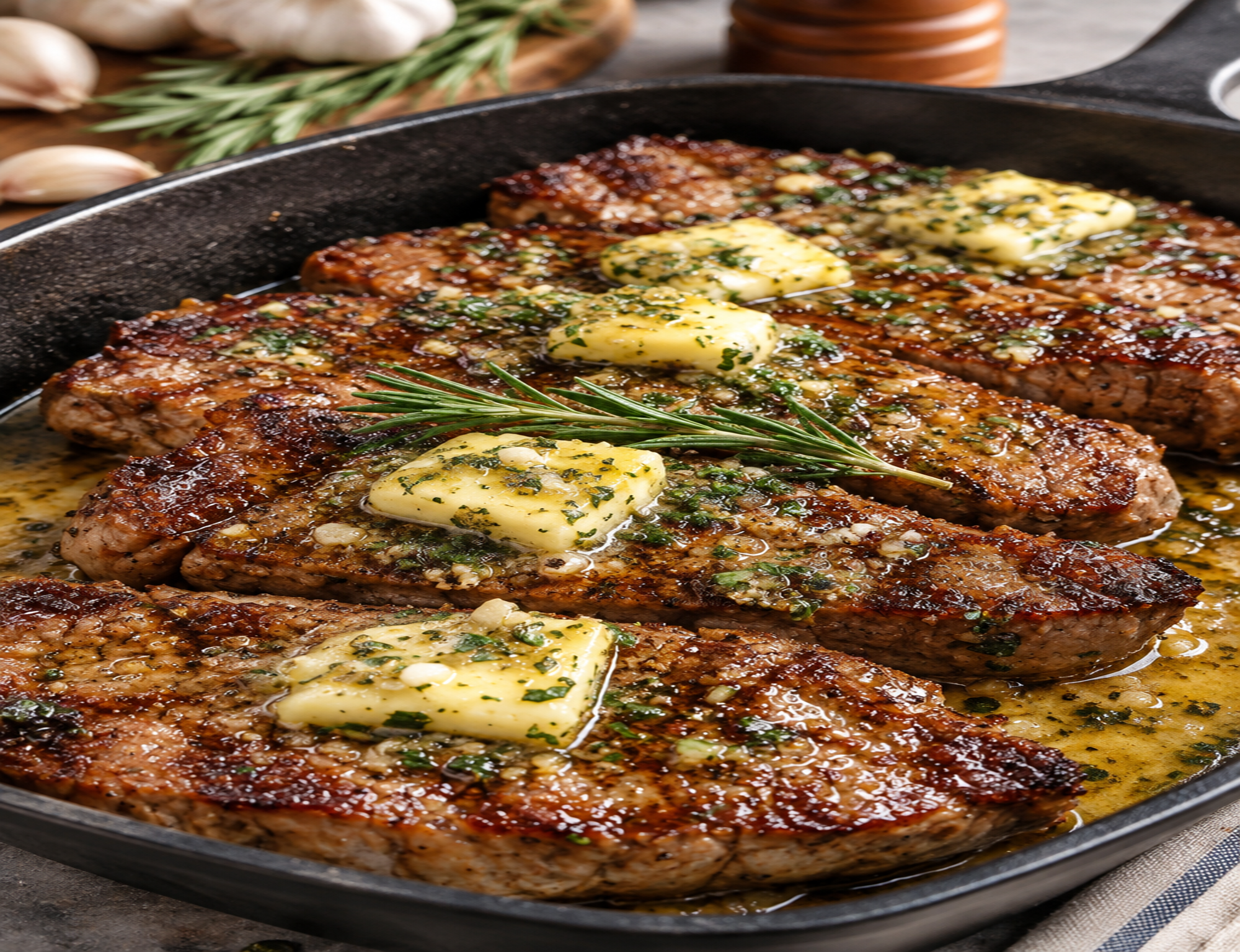
Garlic Butter Steak with Herb Butter
Few things make dinner feel special quite as quickly as a thick steak sizzling in a hot pan. Add garlic, fresh herbs, and a generous spoonful of butter at the end, and you get the kind of rich, savory finish that makes a simple steak feel restaurant-worthy.
This garlic butter steak is built around one important idea: get the crust right first, then finish the steak with butter and aromatics. The result is a deeply browned exterior, a juicy center, and a glossy garlic-herb butter that coats every bite.
Why the Crust Matters So Much
A good steak should not simply be brown. It should have a deeply developed crust with small variations in color and texture. That comes from strong contact between the meat and a properly heated cooking surface.
Moisture is the enemy of that initial sear. Patting the steaks thoroughly dry before seasoning helps the surface brown instead of steaming. A heavy skillet is particularly useful because it holds heat well when the cold steak hits the pan.
Once the steak has developed its crust, butter can be added toward the end. Adding it too early can cause the milk solids in the butter to burn before the steak has finished cooking.
Ingredients
- 2 thick-cut steaks, about 10–12 ounces each
- 1 1/2 teaspoons kosher salt
- 1 teaspoon freshly cracked black pepper
- 1 tablespoon neutral high-heat cooking oil
- 4 tablespoons unsalted butter
- 4 garlic cloves, lightly crushed
- 2 sprigs fresh rosemary
- 2 tablespoons finely chopped fresh parsley
- 1 teaspoon finely chopped fresh thyme, optional
The Small Details That Make Better Steak
Dry the steaks before seasoning
Use paper towels to remove surface moisture from both sides of the meat. This takes only a few seconds but makes a noticeable difference when the steak reaches the pan.
Use enough heat to build a crust
A heavy cast-iron skillet works particularly well because it retains heat. Stainless steel can also produce excellent browning, but it requires attention to preheating and pan temperature.
Do not crowd the pan
If the steaks are packed tightly together, the temperature of the cooking surface can drop and moisture can accumulate. Cook in batches when necessary.
How to Make Garlic Butter Steak
1. Prepare the steaks
Take the steaks out of the refrigerator and pat them very dry. Season both sides evenly with kosher salt and black pepper.
For thicker steaks, allowing them to sit briefly while you prepare the skillet can take some of the chill off the surface, but do not leave raw meat sitting at room temperature for an extended period.
2. Heat the skillet
Place a heavy skillet over medium-high to high heat. Add the oil once the pan is hot. The oil should shimmer but should not be smoking heavily.
3. Sear the first side
Carefully place the steaks in the skillet. You should hear an immediate, strong sizzle. Leave them undisturbed long enough to develop a browned crust, generally about 3–4 minutes for a thick steak, depending on its size and the heat of the pan.
Resist the temptation to constantly move the meat. Consistent contact with the hot surface is what creates those deeply browned areas.
4. Turn and continue cooking
Flip the steaks and continue cooking the second side. Adjust the heat if the crust is becoming excessively dark before the center reaches the desired temperature.
For reliable doneness, use an instant-read thermometer rather than judging the center by color alone. The USDA recommends a minimum internal temperature of 145°F for whole cuts of beef, followed by a three-minute rest.
5. Add the garlic herb butter
Once the steaks are close to your desired doneness, reduce the heat to medium-low. Add the butter, crushed garlic, rosemary, and thyme.
As the butter melts, tilt the pan slightly and repeatedly spoon the foaming butter over the steaks. This coats the browned surface with garlic, herbs, and rich butter while the aromatics perfume the pan.
6. Rest before serving
Transfer the steaks to a plate or cutting board and let them rest for several minutes. Spoon some of the garlic butter from the pan over the top before serving.
Cast Iron or Stainless Steel?
Both can make excellent steak. Cast iron is forgiving because its heavy construction retains heat extremely well, making it particularly useful for thick cuts and strong searing. Stainless steel heats and responds more quickly, but the cook needs to pay closer attention to preheating and sticking.
Whichever pan you use, the bigger factors are a dry steak, adequate preheating, enough cooking surface, and avoiding unnecessary movement while the crust develops.
Common Problems and Easy Fixes
The steak is pale instead of deeply browned
The surface may have been too wet, the pan may not have been hot enough, or the pan may have been overcrowded. Dry the steaks thoroughly and give each piece enough room for proper contact with the cooking surface.
The outside is burning before the center is ready
The heat may be too aggressive for the thickness of the steak. After establishing the crust, reduce the heat and continue cooking more gently. A thermometer makes this much easier to manage.
The garlic tastes bitter
Garlic can burn quickly in a very hot skillet. Add the butter and garlic after the initial searing stage and lower the heat before basting.
The steak seems dry
Overcooking is usually the main culprit. Check the internal temperature during cooking rather than relying exclusively on timing. Steak thickness, starting temperature, pan material, and burner strength can all change the cooking time.
What to Serve with Garlic Butter Steak
The rich butter sauce pairs naturally with simple sides that can absorb the savory juices. Roasted potatoes, mashed potatoes, crisp green beans, asparagus, roasted vegetables, or a simple green salad all work well.
For a steakhouse-style dinner, serve the steak with crispy potatoes and a fresh salad. The acidity and freshness of the salad help balance the richness of the garlic butter.
Storage and Reheating
Refrigerate leftover steak promptly in a covered container. For best quality, use it within 3–4 days.
Rather than reheating the steak aggressively in a very hot pan, warm it gently until heated through. A low oven followed by a brief sear can help preserve the exterior texture. Leftover steak can also be sliced thinly and used in sandwiches, salads, wraps, or grain bowls.
Recipe Card
- Prep Time: 10 minutes
- Cook Time: 10–15 minutes
- Total Time: About 25 minutes
- Servings: 2
- Difficulty: Easy to moderate
- Cuisine: American-inspired
- Course: Dinner
- Calories: Approximately 650–750 calories per serving, depending on steak size and amount of butter consumed
Estimated Nutrition Per Serving
Nutrition will vary substantially with the cut and size of steak. A typical serving provides approximately 50–60g protein, 45–55g fat, and minimal carbohydrates before side dishes are added. These figures are estimates rather than laboratory measurements.
Frequently Asked Questions
What cut of steak works best for garlic butter steak?
Ribeye, New York strip, and thick-cut sirloin can all work well. Choose a steak with enough thickness to develop a browned exterior without overcooking the center too quickly.
Should I use salted or unsalted butter?
Unsalted butter gives you more control over the final seasoning because the steak is already seasoned with salt.
When should I add the butter?
Add it near the end of cooking after the steak has developed its crust. This helps prevent the butter and garlic from burning.
Can I use dried herbs?
Yes, but fresh rosemary, thyme, and parsley provide a brighter flavor and work especially well in the pan-basting butter.
How do I know when the steak is done?
An instant-read thermometer is the most dependable method. For whole cuts of beef, the USDA recommends reaching at least 145°F and resting for three minutes.
Can I make this without a cast-iron skillet?
Yes. A heavy stainless-steel skillet can also produce a strong sear. The key is controlling the heat and maintaining good contact between the steak and pan.
Why should steak rest after cooking?
Resting gives the meat a short period to settle after cooking and makes serving easier. It also prevents immediately cutting into the steak while its juices are still actively moving from the heat.
Can I prepare the garlic herb butter ahead of time?
Yes. You can mix softened butter with minced garlic and chopped herbs, shape it into a small log, wrap it, and refrigerate it until needed. Add portions to the hot steak near the end of cooking.
Related Dinner Ideas
- Classic Pan-Seared Steak
- Garlic Herb Roasted Potatoes
- Rosemary Garlic Beef Dinner
- Easy Steakhouse-Style Dinner
Final Tips for a Better Steak
The best version of this recipe does not require complicated ingredients. Focus on the fundamentals: dry the meat well, heat the pan properly, give the steak enough room, build the crust before adding butter, and use a thermometer to control doneness.
The garlic and herbs then become the finishing touch rather than the thing doing all the work. When that browned crust meets warm butter, roasted garlic, and fresh rosemary, you get a straightforward steak dinner with plenty of flavor and very little fuss.