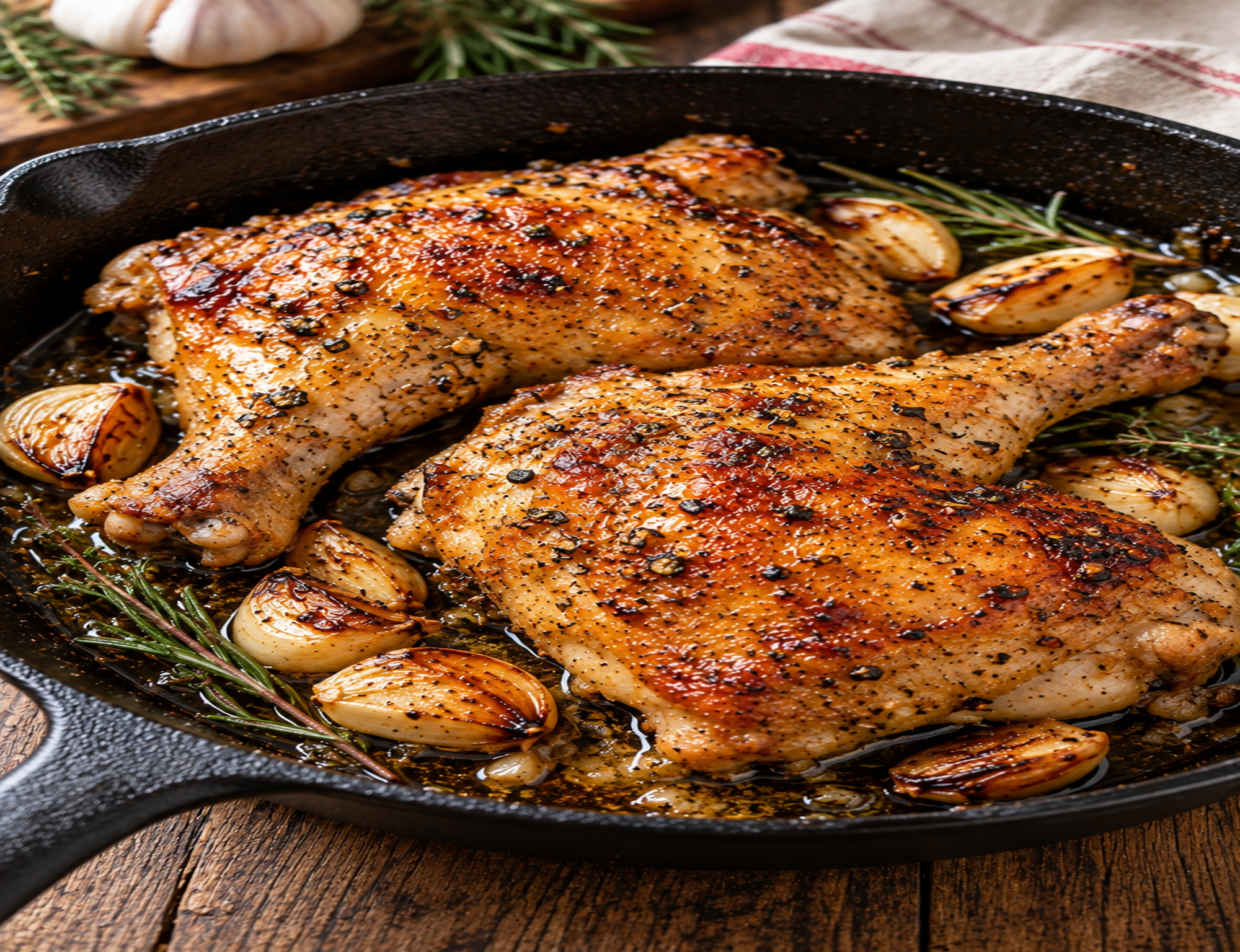
Garlic Herb Roasted Chicken Crispy Skin and Juicy Meat
Garlic herb roasted chicken is a comforting dinner made with tender chicken, golden-brown skin, roasted garlic, and fragrant rosemary. The chicken cooks in a savory mixture of olive oil, butter, herbs, and pan juices, creating a simple but satisfying meal that looks beautiful straight from the oven.
This recipe uses bone-in, skin-on chicken leg quarters, which include the thigh and drumstick. These cuts are well suited to roasting because the bone-in meat stays flavorful, while the skin can develop a beautifully browned surface. A cast iron skillet is a convenient option, although an oven-safe roasting pan works just as well.
The preparation is straightforward: season the chicken, arrange it with garlic and herbs, and let the oven do most of the work. Serve it with roasted vegetables, mashed potatoes, or a fresh salad for an easy family dinner.
Why You’ll Love This Garlic Herb Roasted Chicken
- Simple ingredients: Chicken, garlic, rosemary, olive oil, butter, and everyday seasonings provide plenty of flavor without a complicated marinade.
- Golden, flavorful skin: Patting the chicken dry and roasting it uncovered helps the skin brown instead of trapping excess moisture.
- Juicy dark meat: Bone-in chicken leg quarters are flavorful cuts that work particularly well for oven roasting.
- One-pan convenience: An oven-safe skillet or roasting pan keeps the chicken, garlic, and flavorful juices together.
- Easy to customize: Adjust the herbs and seasonings to suit your preferences or use what you already have in your kitchen.
Ingredients You’ll Need
Each ingredient contributes to the flavor or texture of the finished chicken. Fresh rosemary gives the dish a woodsy aroma, while garlic softens and caramelizes during roasting.
Chicken
Use four bone-in, skin-on chicken leg quarters, approximately 3 to 4 pounds in total. Each leg quarter includes a thigh and drumstick. Choose pieces of reasonably similar size so they cook at a similar rate.
Olive Oil and Butter
Olive oil helps distribute the seasonings and encourages browning. A small amount of unsalted butter adds richness to the pan juices. The butter is optional if you prefer to use olive oil alone.
Garlic and Fresh Herbs
Whole garlic cloves roast alongside the chicken and become softer and milder in flavor. Fresh rosemary and thyme add an aromatic herbal note. If fresh herbs are unavailable, dried herbs can be used in smaller quantities.
Seasonings
Kosher salt, freshly ground black pepper, and paprika create a savory seasoning mixture. Paprika adds color and a subtle peppery flavor without overpowering the garlic and herbs.
Ingredients
- 4 bone-in, skin-on chicken leg quarters, about 3 to 4 pounds total
- 2 tablespoons olive oil
- 1 tablespoon unsalted butter, melted (optional)
- 8 to 10 garlic cloves, peeled and lightly crushed
- 2 teaspoons fresh rosemary leaves, finely chopped
- 1 teaspoon fresh thyme leaves, or 1/2 teaspoon dried thyme
- 1 teaspoon paprika
- 1 1/2 teaspoons kosher salt, or to taste
- 1 teaspoon freshly ground black pepper
- 1 tablespoon fresh lemon juice (optional)
- 2 small rosemary sprigs, for the roasting pan
Equipment
- A large cast iron skillet or oven-safe roasting pan
- Paper towels for drying the chicken
- A small bowl for mixing the seasonings
- Tongs or a spatula for handling the chicken
- An instant-read food thermometer
A 12-inch cast iron skillet may fit two large leg quarters comfortably, but four pieces may require a larger roasting pan. Avoid overcrowding the chicken. If the pieces touch too closely, moisture can collect between them and interfere with browning.
How to Make Garlic Herb Roasted Chicken
Step 1: Preheat the Oven
Preheat the oven to 425°F. Position a rack in the middle of the oven so the chicken receives relatively even heat.
Choose a roasting pan large enough to hold the chicken in a single layer. If using cast iron, make sure the skillet is oven-safe and large enough for the pieces without excessive crowding.
Step 2: Dry and Prepare the Chicken
Pat the chicken leg quarters thoroughly dry with paper towels, paying particular attention to the skin. Removing surface moisture helps the skin brown during roasting.
There is no need to rinse raw chicken. Doing so can spread bacteria around the sink and nearby surfaces. Keep the chicken separate from ready-to-eat foods, and wash your hands and utensils after handling it.
Step 3: Mix the Garlic Herb Seasoning
In a small bowl, combine the olive oil, melted butter if using, chopped rosemary, thyme, paprika, kosher salt, and black pepper.
Stir until the seasonings are evenly distributed. Rub the mixture over the chicken, including the sides of each piece. Concentrate most of the oil and seasoning on the skin, and avoid leaving thick clumps of chopped garlic on the exposed surface because they can burn.
Step 4: Arrange the Chicken and Garlic
Place the chicken skin-side up in the skillet or roasting pan. Scatter the peeled garlic cloves around the chicken, then tuck the rosemary sprigs into the open spaces.
Arrange the pieces in a single layer with a little room between them. Keep the garlic mostly in the pan rather than directly on top of the chicken skin. This allows the cloves to soften and brown in the drippings without burning as easily.
Step 5: Roast Until Golden
Transfer the pan to the preheated oven and roast uncovered for approximately 40 to 50 minutes. Cooking time depends on the size of the chicken pieces, the starting temperature, and how accurately the oven maintains its temperature.
Check the chicken toward the end of the estimated cooking time. The skin should be golden brown, and the juices in the pan should be bubbling. If the garlic begins to darken too quickly, move the cloves toward the center of the pan or spoon a little pan juice over them.
Do not rely on skin color alone to determine whether the chicken is safe to eat. Insert an instant-read thermometer into the thickest part of the meat without touching the bone. Chicken must reach at least 165°F for food safety.
Step 6: Rest and Serve
Remove the pan from the oven when the chicken has reached the safe internal temperature. Let the chicken rest for about 5 to 10 minutes before serving.
If desired, add a little fresh lemon juice to the pan juices and spoon them over the chicken. The roasted garlic can be served alongside the meat, while the remaining juices make a flavorful accompaniment for potatoes, rice, or vegetables.
Tips for Crispy Skin and Juicy Chicken
Start With Dry Skin
Surface moisture slows browning. Patting the chicken dry is one of the simplest ways to help the skin develop a more appealing roasted texture. For extra preparation time, refrigerate the seasoned chicken uncovered for several hours, provided it remains safely refrigerated.
Leave the Pan Uncovered
Roasting uncovered allows moisture to escape. Covering the pan for the entire cooking time traps steam and can leave the skin softer rather than crisp.
Give Each Piece Enough Space
Use a sufficiently large roasting pan so the chicken is not packed tightly together. If necessary, divide the pieces between two pans. Crowding can cause the chicken to steam in its own moisture instead of browning evenly.
Use a Thermometer
An instant-read thermometer is more reliable than judging doneness by appearance. Check the thickest portion of each large piece without touching the bone. The minimum safe internal temperature for chicken is 165°F.
Watch the Garlic
Garlic cloves can brown faster than the chicken, especially when exposed directly to hot metal. Nestle them around the meat and turn them if one side becomes too dark. Golden or lightly browned garlic is preferable to heavily charred garlic, which can taste bitter.
Common Mistakes to Avoid
- Skipping the drying step: Wet skin can make it harder to achieve good browning.
- Overcrowding the pan: Too many pieces in a small skillet can trap moisture and produce uneven results.
- Using only appearance to judge doneness: Brown skin does not guarantee that the center has reached a safe temperature.
- Adding chopped garlic too early on top of the skin: Small garlic pieces may burn before the chicken finishes cooking.
- Cutting the chicken immediately: A short resting period helps keep the meat more enjoyable to eat and gives the juices time to settle.
- Using an unsuitable pan: Make sure the pan is oven-safe, large enough, and appropriate for the cooking temperature.
Easy Variations
Lemon Garlic Herb Chicken
Add a little lemon zest to the seasoning mixture and finish the cooked chicken with fresh lemon juice. The citrus balances the richness of the roasted skin and pan juices.
Garlic Butter Chicken
Use the optional tablespoon of melted butter with the olive oil. For a richer finish, spoon a small amount of the pan juices over the chicken just before serving.
Smoky Paprika Chicken
Replace the regular paprika with smoked paprika for a deeper, smoky flavor. Keep the amount moderate so the spice does not overwhelm the rosemary and garlic.
Chicken With Extra Herbs
Try a small amount of fresh oregano or sage alongside the rosemary and thyme. Add herbs gradually, since stronger varieties can dominate the flavor when used in large quantities.
What to Serve With Garlic Herb Roasted Chicken
This roasted chicken pairs well with sides that complement its savory flavor and absorb the pan juices.
- Roasted potatoes: Toss potato wedges with olive oil, salt, and pepper, and roast them separately until tender and browned.
- Mashed potatoes: Their creamy texture works well with the garlic-infused pan juices.
- Roasted carrots: Carrots provide a naturally sweet contrast to the savory herbs.
- Green beans: Quickly sautéed or steamed green beans add freshness and color to the plate.
- Simple green salad: A lightly dressed salad balances the richness of the chicken.
- Rice or crusty bread: Both are useful for serving alongside the flavorful juices.
How to Store Leftover Roasted Chicken
Allow leftovers to cool slightly, then refrigerate them promptly in shallow, airtight containers. Do not leave cooked chicken at room temperature for more than two hours, or more than one hour when the surrounding temperature exceeds 90°F.
Refrigerate leftovers at 40°F or below and use them within 3 to 4 days. For longer storage, freeze the chicken in freezer-safe containers or bags, ideally in individual portions. Properly frozen leftovers can maintain good quality for several months.
How to Reheat Roasted Chicken
For the best balance of moist meat and browned skin, place the chicken in an oven-safe dish and reheat it in a 350°F oven until the center reaches 165°F. Cover loosely with foil if the meat is drying before it is heated through, then uncover near the end if you want to restore some surface crispness.
A microwave is convenient for individual portions, but it may soften the skin. Arrange the chicken in a microwave-safe dish, cover it loosely, and heat it until thoroughly hot, checking the temperature before serving.
Frequently Asked Questions
Can I use chicken thighs instead of leg quarters?
Yes. Bone-in, skin-on chicken thighs work well with the same garlic and herb seasoning. Smaller pieces may finish cooking sooner, so begin checking their internal temperature earlier. Boneless thighs also work, but their cooking time will be different.
Can I use dried rosemary instead of fresh rosemary?
Yes. Dried rosemary can replace fresh rosemary, although its flavor is more concentrated and its texture is different. Start with about 1/2 to 1 teaspoon of dried rosemary for this recipe, adjusting to taste.
Should I cover the chicken while roasting?
For more browned skin, roast the chicken uncovered. If the surface becomes too dark before the center reaches 165°F, loosely tent the pan with foil for the remainder of the cooking time.
Can I prepare the chicken ahead of time?
Yes. You can season the chicken and keep it covered in the refrigerator for several hours before cooking. For food safety, marinate raw chicken in the refrigerator rather than on the counter. Pat away any excess surface moisture before roasting.
Can I make this recipe without a cast iron skillet?
Absolutely. A metal roasting pan or another oven-safe baking dish is suitable. A cast iron skillet retains heat well, but it is not essential to making flavorful roasted chicken.
How do I know when the chicken is done?
Use a food thermometer to check the thickest portion of the meat without touching the bone. Chicken should reach a minimum internal temperature of 165°F. If the pieces vary in size, check each one separately.
Final Thoughts
Garlic herb roasted chicken is a practical way to turn a handful of everyday ingredients into a flavorful, satisfying meal. The combination of roasted garlic, rosemary, black pepper, and golden chicken skin gives the dish plenty of character without requiring a complicated cooking process.
For the best results, dry the chicken thoroughly, avoid overcrowding the pan, keep an eye on the garlic, and use a thermometer to confirm doneness. Serve it fresh from the oven with your favorite vegetables or potatoes, and save any leftovers for another easy meal.
Garlic Herb Roasted Chicken Recipe Card
Garlic Herb Roasted Chicken
Golden-brown chicken leg quarters roasted with garlic, rosemary, thyme, paprika, and savory pan juices.
Prep Time: 15 minutes
Cook Time: 40–50 minutes
Resting Time: 5–10 minutes
Total Time: Approximately 1 hour to 1 hour 15 minutes
Yield: 4 servings
Cooking Temperature: 425°F
Ingredients
- 4 bone-in, skin-on chicken leg quarters, about 3–4 pounds total
- 2 tablespoons olive oil
- 1 tablespoon melted unsalted butter (optional)
- 8–10 garlic cloves, peeled and lightly crushed
- 2 teaspoons chopped fresh rosemary
- 1 teaspoon fresh thyme leaves, or 1/2 teaspoon dried thyme
- 1 teaspoon paprika
- 1 1/2 teaspoons kosher salt, or to taste
- 1 teaspoon freshly ground black pepper
- 1 tablespoon fresh lemon juice (optional)
- 2 small rosemary sprigs
Instructions
- Preheat the oven to 425°F and prepare a large oven-safe skillet or roasting pan.
- Pat the chicken dry with paper towels. Do not rinse raw chicken.
- Mix the olive oil, optional melted butter, chopped rosemary, thyme, paprika, salt, and black pepper in a small bowl.
- Rub the seasoning mixture over the chicken, concentrating on the skin.
- Arrange the chicken skin-side up in the pan. Add the garlic cloves and rosemary sprigs around the meat.
- Roast uncovered for approximately 40–50 minutes, depending on the size of the pieces.
- Check the thickest part of each piece with an instant-read thermometer. The chicken must reach at least 165°F.
- Rest for 5–10 minutes. Add optional lemon juice to the pan juices and serve.
Recipe Notes
- Use a larger pan or two pans if necessary to avoid overcrowding.
- Move the garlic away from excessively hot spots if it browns too quickly.
- Cooking times are estimates. Use internal temperature to determine when the chicken is safe to eat.
- Refrigerate leftovers within two hours and use within 3–4 days.
Estimated Nutrition Per Serving: Not calculated. Actual nutrition depends on the size of the chicken portions, how much skin is eaten, and how much oil and pan juice is consumed.