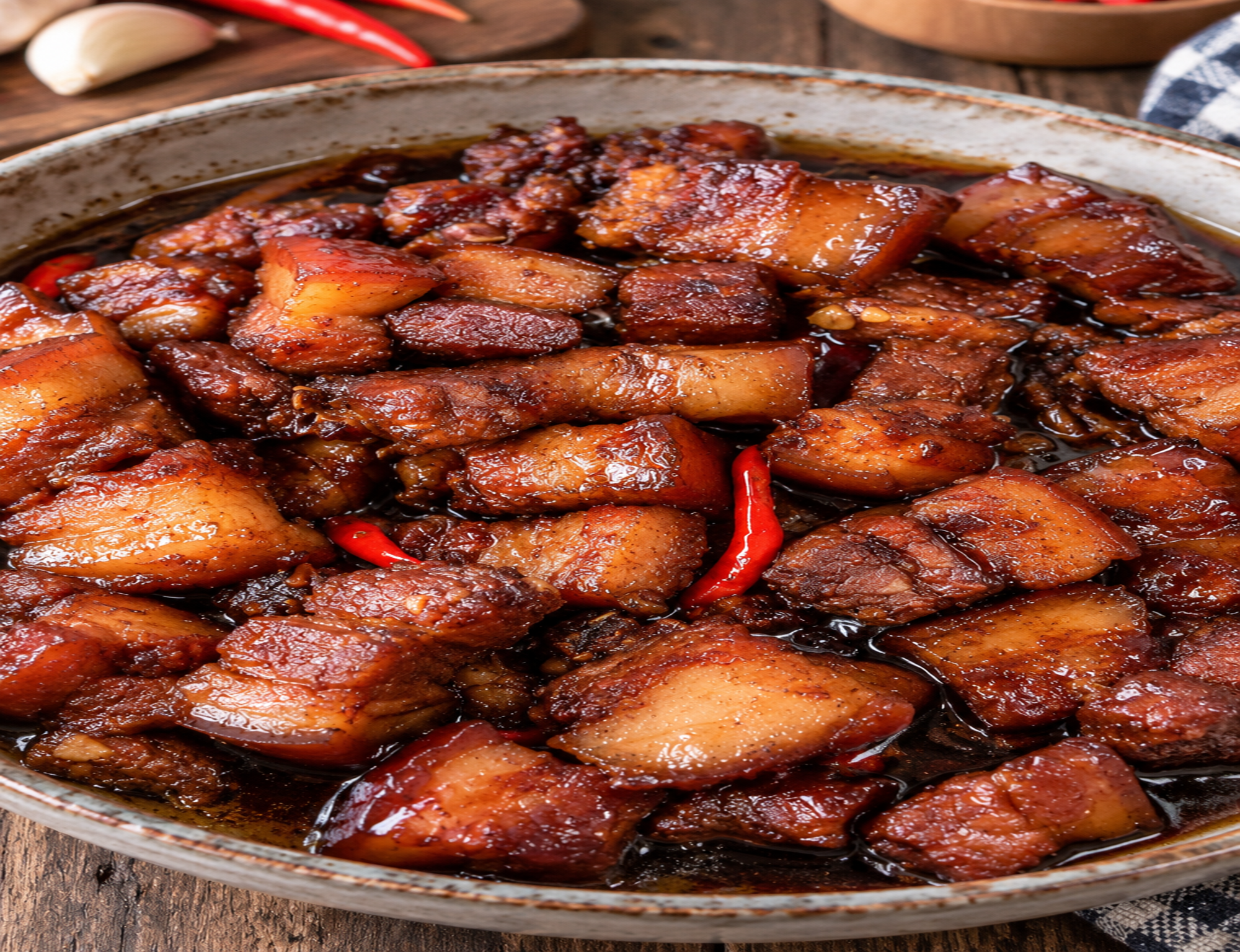
Sticky Soy-Braised Pork Belly Bites
There is something especially satisfying about pork belly when it has been given enough time to become tender while the outside develops a deeply caramelized coating. These sticky soy-braised pork belly bites take that idea and turn it into a simple, intensely flavorful dinner.
The pork is cut into generous bite-size pieces, browned until the edges take on color, then slowly simmered with soy sauce, aromatics, and a touch of sweetness. As the liquid reduces, it clings to the pork rather than remaining thin and watery. The finished pieces should be tender enough to yield easily when cut with a fork, with a glossy coating and little pockets of caramelized sauce around the edges.
Fresh red chilies add a gentle hit of heat and color. Garlic brings another layer of savory flavor. Serve the pork over steamed rice so the rice can soak up some of the dark, flavorful sauce.
Why This Pork Belly Turns Out So Flavorful
The key is not simply adding a lot of sauce. It is building flavor in stages.
First, browning the pork creates a more developed surface flavor. Pork belly contains plenty of fat, so starting with a dry pan and allowing the pieces to brown gives the exterior time to caramelize instead of immediately steaming.
Then comes the braising stage. The liquid gradually softens the meat while the aromatics infuse the pork. Finally, the lid is removed toward the end so excess liquid can evaporate. This last step is what turns a braising liquid into the sticky coating that makes the dish distinctive.
Do not rush the reduction. If the sauce still looks loose when the pork is tender, give it several additional minutes over medium heat. The consistency changes quickly near the end.
Ingredients You’ll Need
- 2 pounds pork belly, skin removed and cut into 1½-inch pieces
- 1 tablespoon neutral cooking oil, such as avocado, canola, or vegetable oil
- 5 cloves garlic, finely chopped
- 1-inch piece fresh ginger, peeled and thinly sliced
- ½ cup low-sodium soy sauce
- ¼ cup water
- 3 tablespoons brown sugar
- 1 tablespoon rice vinegar
- 1 tablespoon toasted sesame oil
- ½ teaspoon freshly ground black pepper
- 3 to 5 fresh red chilies, sliced or left whole depending on desired heat
- 2 green onions, sliced, for serving
- 1 teaspoon toasted sesame seeds, optional
Choosing Pork Belly for the Best Texture
Look for pork belly with a visible balance of meat and fat rather than a slab that is almost entirely fat. The layers of fat are important because they help keep the meat rich during braising, but too much excess fat can leave the finished sauce heavy.
If the pork belly is very thick, keep the pieces relatively uniform. Consistent pieces are easier to brown evenly and will finish cooking at approximately the same time.
The Cooking Method
1. Dry and Brown the Pork
Pat the pork belly thoroughly dry with paper towels. Moisture on the surface makes browning more difficult.
Heat a large heavy-bottomed Dutch oven or deep skillet over medium heat. Add the oil, followed by the pork in a single layer. Work in batches if necessary rather than crowding the pan.
Brown the pieces for about 2 to 3 minutes per side, turning as needed. You are looking for noticeable golden-brown to deep-brown edges rather than a completely cooked interior.
Transfer the browned pork to a plate. Leave the rendered fat in the pan, but remove some if there is an excessive amount.
2. Build the Aromatic Base
Add the garlic and ginger to the pan. Cook for about 30 seconds, stirring constantly, until fragrant.
Be careful here. Garlic can go from lightly golden to burnt very quickly. If the bottom of the pan contains dark browned bits, lower the heat before adding the aromatics.
3. Add the Braising Sauce
Pour in the soy sauce and water. Add the brown sugar, rice vinegar, sesame oil, and black pepper.
Stir while scraping the bottom of the pan with a wooden spoon. Those browned bits contain concentrated flavor and will dissolve into the sauce.
4. Braise Until Tender
Return the pork belly to the pan along with any juices that collected on the plate. Add the red chilies.
Bring the liquid to a gentle simmer, then reduce the heat to low. Cover and cook for approximately 60 to 75 minutes, stirring occasionally.
The pork should become noticeably tender. If the liquid is evaporating too quickly before the pork is tender, add a small splash of water and continue cooking.
5. Reduce Until Sticky
Remove the lid and increase the heat to medium. Simmer for another 8 to 15 minutes, stirring occasionally, until the sauce becomes thick enough to coat the pork.
This is the moment to watch closely. A sauce that looks slightly too thin at first can become glossy and concentrated within a few minutes. Stir more frequently as it reduces to prevent the sugar and soy sauce from scorching.
6. Finish and Serve
Turn off the heat when the pork is glossy and the sauce clings to the pieces. Taste before adding additional salt because soy sauce can vary considerably in saltiness.
Finish with sliced green onions and sesame seeds if desired. Serve immediately with steamed white rice, jasmine rice, or another neutral grain that can absorb the sauce.
Dutch Oven or Deep Skillet?
Both can work well, but they behave slightly differently.
| Cookware | What It Does Well | What to Watch |
|---|---|---|
| Heavy Dutch oven | Holds steady heat and works especially well for longer braising. | Can take longer to heat and may retain heat after the burner is lowered. |
| Deep heavy skillet | Provides a broad surface for browning and faster sauce reduction. | May require closer attention during the final reduction. |
If you make braised dishes regularly, a heavy, oven-safe Dutch oven is useful beyond this recipe. For this particular stovetop preparation, however, a deep skillet with a well-fitting lid is completely practical.
Three Details That Make a Big Difference
Do not skip drying the pork
Dry pork browns more effectively. Excess surface moisture creates steam, which delays the development of those dark caramelized edges.
Keep the braise gentle
A violent boil is not necessary. A steady low simmer gives the connective tissue time to soften without rapidly evaporating all of the cooking liquid.
Reduce at the end, not the beginning
If you aggressively reduce the sauce before the pork is tender, the concentrated soy and sugar can become too salty or burn. Keep enough liquid in the pan during the braising stage, then concentrate it once the meat has reached the desired texture.
What If the Sauce Is Too Thin?
Remove the lid and continue simmering over medium heat. Avoid immediately adding cornstarch unless you specifically want a thickened sauce rather than a naturally reduced glaze.
As water evaporates, the soy sauce, sugar, rendered pork fat, and cooking juices become more concentrated. Stir periodically and watch the pan carefully during the final few minutes.
What If the Pork Is Still Tough?
Give it more time.
Pork belly can be tender on the outside while the connective tissue inside still needs additional cooking. Add a few tablespoons of water if the pan is becoming dry, cover it again, and continue simmering until the pieces are fork-tender.
For food safety, use a reliable thermometer when appropriate rather than judging doneness from color alone. Whole pork cuts should reach at least 145°F with a three-minute rest, although a long braise will commonly take the pork well beyond that temperature in order to achieve its characteristic tender texture.
Easy Variations
- More heat: Add extra fresh chilies or a pinch of crushed red pepper.
- Sweeter glaze: Increase the brown sugar by 1 tablespoon if you prefer a more pronounced sweet-savory finish.
- Ginger-forward: Add another ½ inch of fresh ginger for a brighter aromatic note.
- Less rich: Skim some of the rendered fat from the surface before reducing the sauce.
- Extra garlic: Add two additional cloves during the final few minutes of cooking for a stronger garlic flavor.
Serving Ideas
Steamed jasmine rice is the simplest pairing because it provides a mild base for the concentrated sauce. For more texture, serve the pork alongside steamed broccoli, bok choy, green beans, or sautéed cabbage.
A crisp cucumber salad can also provide a useful contrast to the richness of the pork. Keep the side dish fresh and lightly dressed rather than heavily sauced.
Make-Ahead, Storage, and Reheating
This pork belly is particularly well suited to make-ahead meals. Once cooked, allow it to cool promptly and transfer it to a shallow airtight container. Refrigerate within two hours and use refrigerated leftovers within 3 to 4 days.
The fat will firm up when chilled. That is normal. When reheating, warm the pork gently in a skillet over medium-low heat with a splash of water. The sauce will loosen as it warms.
For meal prep, portion the pork separately from rice and vegetables. Reheating the pork gently helps preserve the texture instead of drying the exterior.
Frequently Asked Questions
Can I use boneless pork shoulder instead of pork belly?
Yes. Pork shoulder can be braised using the same general method, although it will have less of the rich, layered fat that makes pork belly especially succulent. You may also need to adjust the cooking time depending on the size of the pieces.
Can I make this recipe without fresh chilies?
Absolutely. The chilies contribute heat and freshness but are not essential to the braising process. Leave them out for a milder version or use a small amount of crushed red pepper instead.
Why is my pork belly greasy?
Pork belly naturally contains substantial fat. If the finished dish feels excessively oily, allow it to sit briefly and skim some surface fat before the final sauce reduction. Starting with a balanced piece of pork belly also helps.
Can I make the pork belly in an oven?
Yes. After browning the pork and adding the braising liquid, cover the oven-safe pot and cook at approximately 325°F until tender. Finish uncovered on the stovetop to reduce the sauce and create the sticky coating.
Should I use regular or low-sodium soy sauce?
Low-sodium soy sauce gives you more control over the final seasoning, particularly because the sauce becomes concentrated during reduction. If using regular soy sauce, consider starting with slightly less and adjusting near the end.
How do I keep the sauce from burning?
Keep the heat moderate during the final reduction and stir more frequently as the sauce thickens. Sugar becomes increasingly prone to scorching as water evaporates.
Can I freeze the leftovers?
Yes. Cool the pork completely, place it in an airtight freezer-safe container, and freeze for up to about 2 to 3 months for best quality. Thaw in the refrigerator before reheating gently.
What should I serve with soy-braised pork belly?
Steamed rice is the classic easy choice, but roasted or steamed vegetables, cucumber salad, sautéed greens, and simple noodles also work well.
Related Recipe Ideas for a Pork Dinner Collection
- Garlic and Ginger Braised Pork Shoulder
- Sticky Honey-Soy Pork Chops
- Slow-Braised Pork with Caramelized Onions
- Spicy Soy-Glazed Pork Meatballs
Recipe Card
| Prep Time | 15 minutes |
|---|---|
| Cook Time | 75–90 minutes |
| Total Time | 90–105 minutes |
| Servings | 6 |
| Difficulty | Easy to moderate |
| Cuisine | Asian-inspired |
| Course | Main course |
| Calories | Approximately 590 calories per serving, depending on portion size and rendered fat |
Sticky Soy-Braised Pork Belly Bites Recipe
Ingredients: 2 pounds pork belly, 1 tablespoon neutral oil, 5 garlic cloves, 1-inch fresh ginger, ½ cup low-sodium soy sauce, ¼ cup water, 3 tablespoons brown sugar, 1 tablespoon rice vinegar, 1 tablespoon toasted sesame oil, ½ teaspoon black pepper, 3–5 red chilies, 2 green onions, and optional sesame seeds.
Method: Brown the dried pork belly pieces in a heavy pot. Sauté garlic and ginger briefly, then add soy sauce, water, brown sugar, rice vinegar, sesame oil, and pepper. Return the pork to the pan with the chilies. Cover and gently braise for 60–75 minutes until tender. Remove the lid and reduce the sauce for 8–15 minutes until thick, glossy, and clinging to the pork. Finish with green onions and sesame seeds.
Estimated nutrition: About 590 calories, 24g protein, 11g carbohydrates, and 48g fat per serving. Actual nutrition will vary based on the pork belly’s fat content, portion size, and how much rendered fat remains in the finished dish.
The best version of these pork belly bites is not necessarily the one with the thickest sauce or the darkest color. It is the one where the pork is genuinely tender, the sauce tastes balanced rather than simply salty or sweet, and every piece carries a little of that sticky caramelized coating. Serve it hot over rice, spoon the extra sauce over the top, and let the simple combination of pork, soy, garlic, ginger, and chili do the work.