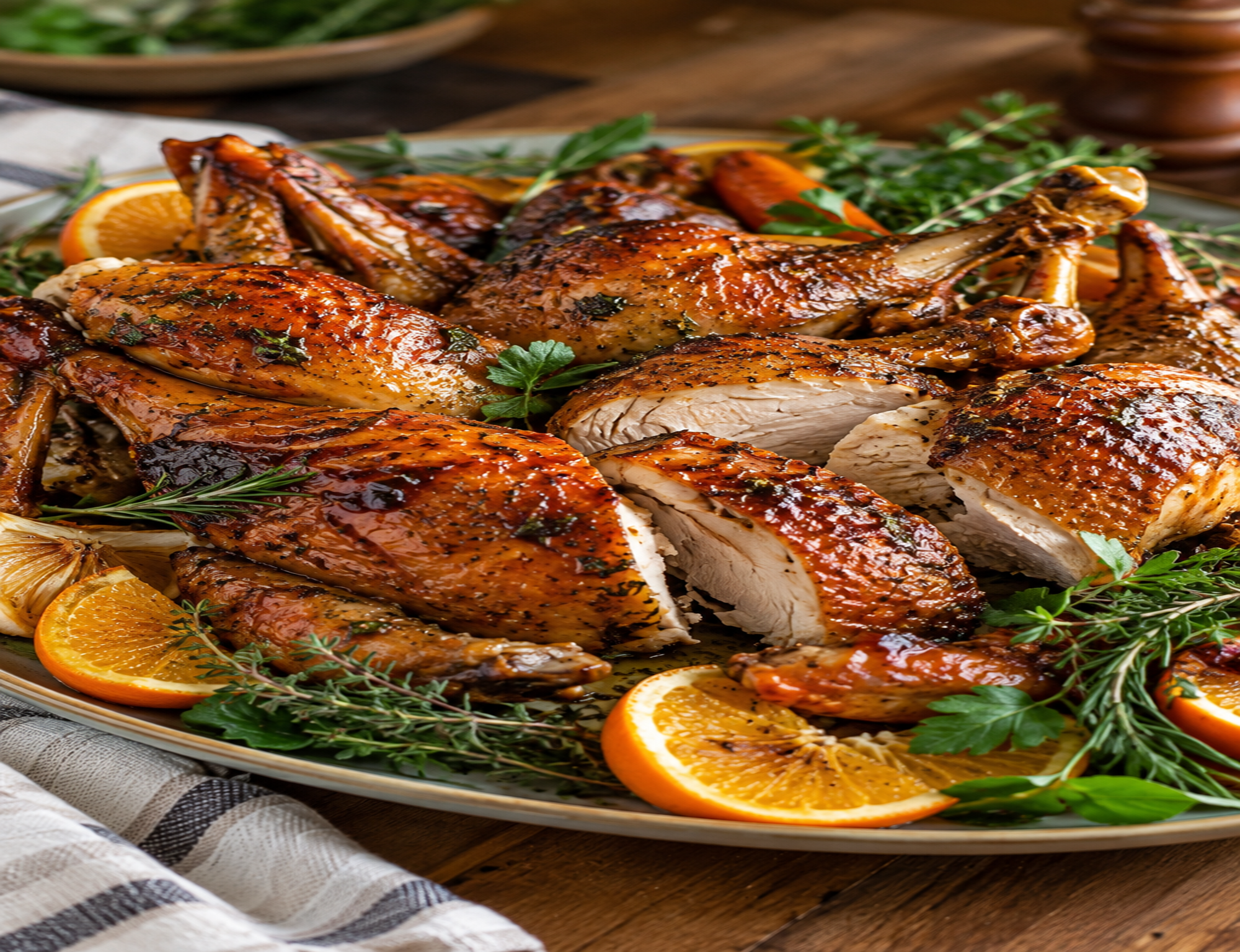
Juicy Herb Roasted Chicken with Crispy Golden Skin
There is something especially satisfying about a platter of beautifully roasted chicken coming out of the oven. The skin should be deeply golden and lightly crisp, while the meat underneath stays tender enough to pull apart with a fork. Fresh herbs and roasted orange add another layer of flavor without making the recipe complicated.
This version focuses on a few details that make a noticeable difference: drying the chicken before seasoning, using enough space for the heat to circulate, and relying on an instant-read thermometer rather than judging doneness by color alone.
Why This Roasted Chicken Turns Out So Well
The combination of rosemary, thyme, garlic, black pepper, olive oil, and orange creates a savory flavor profile with a subtle citrus brightness. Orange is particularly useful here because its aromatic oils complement roasted poultry while the caramelized citrus adds a slightly sweet, concentrated flavor.
The crisp skin comes down largely to moisture management. Wet skin has to spend oven time evaporating water before it can brown efficiently. Patting the chicken dry before roasting gives the surface a better opportunity to develop that characteristic roasted texture.
Ingredients You’ll Need
- 1 whole chicken, about 4 to 5 pounds
- 2 tablespoons olive oil
- 1 1/2 teaspoons kosher salt
- 1 teaspoon freshly ground black pepper
- 1 tablespoon fresh rosemary, finely chopped
- 1 tablespoon fresh thyme leaves
- 1 teaspoon dried garlic powder
- 5 garlic cloves, lightly crushed
- 1 orange, halved
- 1 small onion, quartered
- 1 tablespoon unsalted butter, softened
- Fresh parsley, for serving
- Extra rosemary and thyme, for garnish
Before You Roast: Three Small Details That Matter
Dry the chicken thoroughly
Use paper towels to pat the skin very dry, including around the legs and wings. If you have enough time, place the uncovered chicken on a tray in the refrigerator for several hours before roasting. The drier surface encourages better browning.
Season beneath and over the skin
Gently loosen the skin over the breast and rub a small amount of softened butter underneath. Rub the remaining olive oil and herb mixture over the outside. This gives the meat additional seasoning while helping the skin brown.
Use fresh herbs where they make the most difference
Fresh rosemary and thyme provide a brighter aroma than dried herbs. Dried garlic powder works well in the surface seasoning because it distributes evenly without adding large pieces that can burn.
How to Make Juicy Herb Roasted Chicken
1. Prepare the chicken
Heat the oven to 425°F. Remove the chicken from its packaging and pat it completely dry. Remove any excess fat or loose pieces of skin that could burn during roasting.
Place the chicken breast-side up on a sturdy roasting pan or rimmed baking sheet. Tuck the wing tips underneath the body if desired, and loosely tie the legs together with kitchen twine.
2. Make the herb seasoning
Combine olive oil, kosher salt, black pepper, rosemary, thyme, and garlic powder. Rub the mixture generously over the chicken. Carefully work softened butter beneath the breast skin without tearing it.
Place the crushed garlic, onion, and orange halves around and inside the chicken. The citrus and aromatics will release their fragrance as they roast.
3. Start roasting at high heat
Roast at 425°F for about 20 minutes. The higher initial temperature helps the skin begin browning before the chicken finishes cooking.
4. Finish at a moderate temperature
Reduce the oven temperature to 375°F and continue roasting until the thickest part of the breast and the innermost portion of the thigh reach a safe internal temperature.
Cooking time will vary depending on the size and shape of the chicken, so use temperature rather than the clock as the final guide.
5. Check the temperature
Insert an instant-read thermometer into the thickest part of the breast without touching bone. Check the thigh as well. Poultry should reach at least 165°F for food safety.
Once the chicken reaches the appropriate temperature, transfer it to a cutting board and let it rest for approximately 15 to 20 minutes before carving.
Why Resting the Chicken Matters
Cutting immediately into a roast chicken can release a large amount of hot juice onto the cutting board. Resting gives the meat time to settle after roasting and makes carving easier.
It also gives you a short window to finish the rest of dinner. Spoon pan juices over the chicken just before serving, or use them as the starting point for a simple pan gravy.
How to Get Crispier Chicken Skin
- Dry the chicken thoroughly before seasoning.
- Do not cover the chicken while roasting.
- Avoid crowding the roasting pan with too many vegetables.
- Use a roasting rack when you want more airflow underneath the chicken.
- Keep the oven fully preheated before the chicken goes in.
- For extra browning at the end, watch the chicken closely under the broiler for a short period.
The broiler is optional. If you use it, stay beside the oven because the skin can go from beautifully browned to burned very quickly.
What If the Skin Is Brown but the Chicken Isn’t Done?
This is one of the most common problems with oven-roasted poultry. Large chickens can brown considerably before the center reaches the required temperature.
If the skin is already deeply browned, loosely tent the breast area with foil and continue cooking until the internal temperature reaches the safe target. Do not rely on skin color or clear juices alone as a doneness test.
Fresh Orange Makes a Simple Flavor Upgrade
Orange works especially well with roasted chicken because its acidity and aromatic oils balance the richness of the browned skin. For a more pronounced citrus flavor, grate a small amount of orange zest into the herb mixture before roasting.
Roasted orange slices can also be served directly on the platter. Their edges become darker and slightly caramelized, making them both attractive and flavorful.
Equipment That Makes This Recipe Easier
You do not need specialized equipment, but an instant-read thermometer is one kitchen tool worth having for roast chicken. It removes much of the guesswork from determining when the meat is cooked.
A sturdy rimmed baking sheet works for a smaller chicken, while a roasting pan with a rack provides additional airflow around a larger bird. A sharp carving knife is also helpful because clean cuts are easier to make through the breast and joints.
Roasting Pan vs. Rimmed Baking Sheet
A roasting pan is useful when you are preparing a larger chicken and want room for vegetables and pan juices underneath. A rimmed baking sheet is more compact and can encourage good surface browning because the chicken is exposed to more circulating oven heat.
For a simple family dinner, either option works. The important considerations are stability, sufficient space, and keeping the chicken from sitting in a deep pool of liquid.
Easy Variations
Lemon and rosemary chicken
Replace the orange with lemon and add extra rosemary for a sharper, more herb-forward flavor.
Garlic butter roasted chicken
Increase the softened butter and add finely minced fresh garlic beneath the breast skin. Watch the surface carefully because exposed garlic can brown quickly.
Honey-orange finish
For a sweeter glaze, combine a small amount of honey with orange juice and brush it over the chicken during the final few minutes of roasting. Avoid adding it too early because the sugars can darken rapidly.
What to Serve With Herb Roasted Chicken
Keep the sides relatively simple so they do not compete with the roasted herbs and citrus. Roasted potatoes, green beans, carrots, mashed potatoes, a crisp green salad, or roasted Brussels sprouts all work naturally with this chicken.
For a larger dinner, spoon some of the pan juices over the sliced meat and serve the roasted orange and garlic alongside it.
Make-Ahead, Storage, and Reheating
The chicken can be seasoned several hours ahead of time and kept refrigerated until ready to roast. Keep raw poultry refrigerated and separate from ready-to-eat foods during preparation.
Store leftover cooked chicken in a covered container in the refrigerator and use it within 3 to 4 days. For longer storage, cooked chicken can be frozen in an airtight freezer-safe container.
To reheat, place portions in a covered baking dish with a small splash of broth or water. Warm gently in a 325°F oven until heated through. Reheating at a moderate temperature helps reduce the chance of turning the breast meat dry.
Frequently Asked Questions
What temperature should roasted chicken reach?
Chicken should reach a minimum internal temperature of 165°F. Measure the thickest part of the meat with an instant-read thermometer and avoid touching bone with the probe.
How long does a 4 to 5 pound chicken take to roast?
A chicken in this size range commonly takes around 1 to 1 1/2 hours, but oven temperature, bird shape, starting temperature, and cookware can change the timing. Use the thermometer as the final measure of doneness.
Why isn’t my chicken skin crispy?
Excess surface moisture, overcrowding, low oven temperature, or covering the chicken can prevent proper browning. Thoroughly drying the skin before roasting is one of the simplest improvements.
Can I use dried rosemary instead of fresh?
Yes. Dried rosemary is more concentrated, so use less than you would of fresh rosemary. Crushing dried rosemary between your fingers before adding it can help release its aroma.
Can I prepare the chicken the night before?
Yes. Season the chicken and keep it covered in the refrigerator until you are ready to roast it. For the crispest skin, pat it dry again before placing it in the oven.
Can I roast vegetables with the chicken?
Absolutely. Potatoes, carrots, onions, and Brussels sprouts are good choices. Give the vegetables enough space to roast rather than steam, and avoid filling the pan so heavily that air cannot circulate.
How long should roasted chicken rest?
Allow the chicken to rest for approximately 15 to 20 minutes before carving. This also gives you time to finish sauces and side dishes.
Can I use chicken pieces instead of a whole chicken?
Yes. Bone-in chicken thighs, drumsticks, and breast portions can all use the same herb and orange flavor profile. Cooking time will be shorter and should be determined by internal temperature.
Recipe Card
Juicy Herb Roasted Chicken with Crispy Golden Skin
- Prep Time: 20 minutes
- Cook Time: 75–90 minutes, depending on chicken size
- Total Time: About 1 hour 45 minutes
- Servings: 6–8
- Difficulty: Intermediate
- Cuisine: American-inspired
- Course: Dinner / Main Course
- Calories: Approximately 430 calories per serving, depending on portion size and whether the skin is eaten
Ingredients
- 1 whole chicken, 4–5 pounds
- 2 tablespoons olive oil
- 1 1/2 teaspoons kosher salt
- 1 teaspoon black pepper
- 1 tablespoon fresh rosemary
- 1 tablespoon fresh thyme
- 1 teaspoon garlic powder
- 5 garlic cloves
- 1 orange
- 1 small onion
- 1 tablespoon softened unsalted butter
- Fresh parsley for garnish
Instructions
- Preheat the oven to 425°F.
- Pat the chicken thoroughly dry with paper towels.
- Combine olive oil, salt, pepper, rosemary, thyme, and garlic powder.
- Rub the seasoning mixture over the chicken and place softened butter beneath the breast skin.
- Place garlic, onion, and orange around and inside the chicken.
- Roast at 425°F for 20 minutes.
- Reduce the oven temperature to 375°F and continue roasting.
- Check the thickest parts of the breast and thigh with an instant-read thermometer.
- Remove the chicken when it has reached a safe internal temperature of at least 165°F.
- Rest for 15–20 minutes, carve, garnish with fresh herbs, and serve with roasted orange and pan juices.
Note: Cooking time is an estimate. The chicken’s internal temperature is the reliable indicator of doneness.
More Recipes to Build Around This Dinner
For a similar dinner theme, consider developing recipes around garlic-roasted chicken thighs, lemon herb chicken, roasted root vegetables, or a simple homemade pan gravy. These ideas naturally extend the same poultry-and-roasting content cluster without changing the focus of this recipe.
Final Tips for the Best Roast Chicken
For the most reliable result, focus less on achieving a specific number of minutes and more on controlling moisture, oven temperature, and internal temperature. Dry skin, adequate airflow, and a properly preheated oven create the conditions for better browning. A thermometer takes the guesswork out of the most important part.
Once carved, arrange the chicken on a platter with the roasted orange, garlic, and herbs. The result is simple enough for a family dinner but attractive enough to bring straight to the center of a holiday table.